5 lis 2026 / Ian Plant
Ultra-Wide-Angle Photography: Landscape and Astrophotography at 12 mm
From the northern lights of Iceland to the narrow canyons of Utah, Ian Plant seeks landscapes that change our perception of space. With the TAMRON 12-20mm F2.8 (Model A084), the American photographer takes ultra-wide-angle photography a step further. For him, 12 mm is not simply a way to fit more landscape into the frame. It becomes a tool for composition, depth and a sense of space.
For Ian, photographing with a wide-angle lens has long been a way of seeing the world: moving close to a foreground, exaggerating proportions and giving viewers the feeling of standing in the middle of the scene. The TAMRON 12-20mm F2.8 expands this visual language with an especially wide angle of view.
What makes 12 mm so special?
On the spec sheet, there are only four millimeters between 16 and 12 mm. Through the viewfinder, the difference looks much greater: the angle of view expands significantly, foreground and background appear farther apart, and even large areas of sky can be shown together with the landscape.
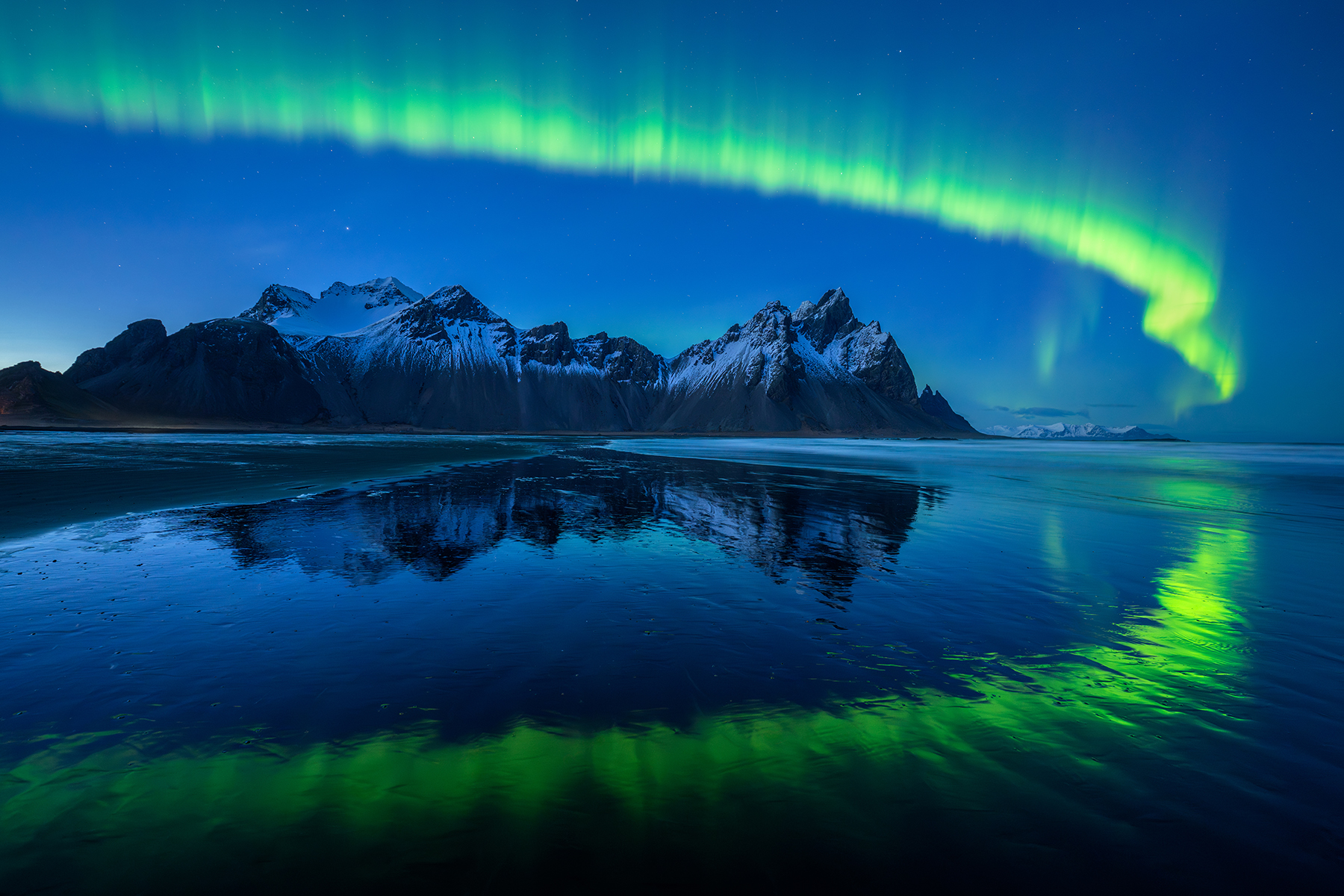
In Iceland, Ian was able to capture a broad, sweeping aurora together with the fjords and their reflection in the water. A more conventional wide-angle lens would have required a tighter crop. At 12 mm, the spatial scale of the entire scene is preserved.
Important: An ultra-wide-angle lens does not automatically make an image more impressive. The more that appears in the frame, the more clearly the main subject, foreground and visual flow need to be organized.
Use the foreground as a visual anchor
Ultra-wide-angle photography does not mean putting everything randomly into the frame. Instead, Ian looks for a visual anchor: a clear shape that catches the eye first. In landscape photography, this anchor is often very close to the camera—for example, a rock, an ice formation, a plant or a distinctive line in the ground.
The closer the camera is to this element, the larger it appears in relation to the background. At the same time, mountains, horizons or clouds appear farther away. This exaggeration of proportions creates depth and makes the image more dynamic.
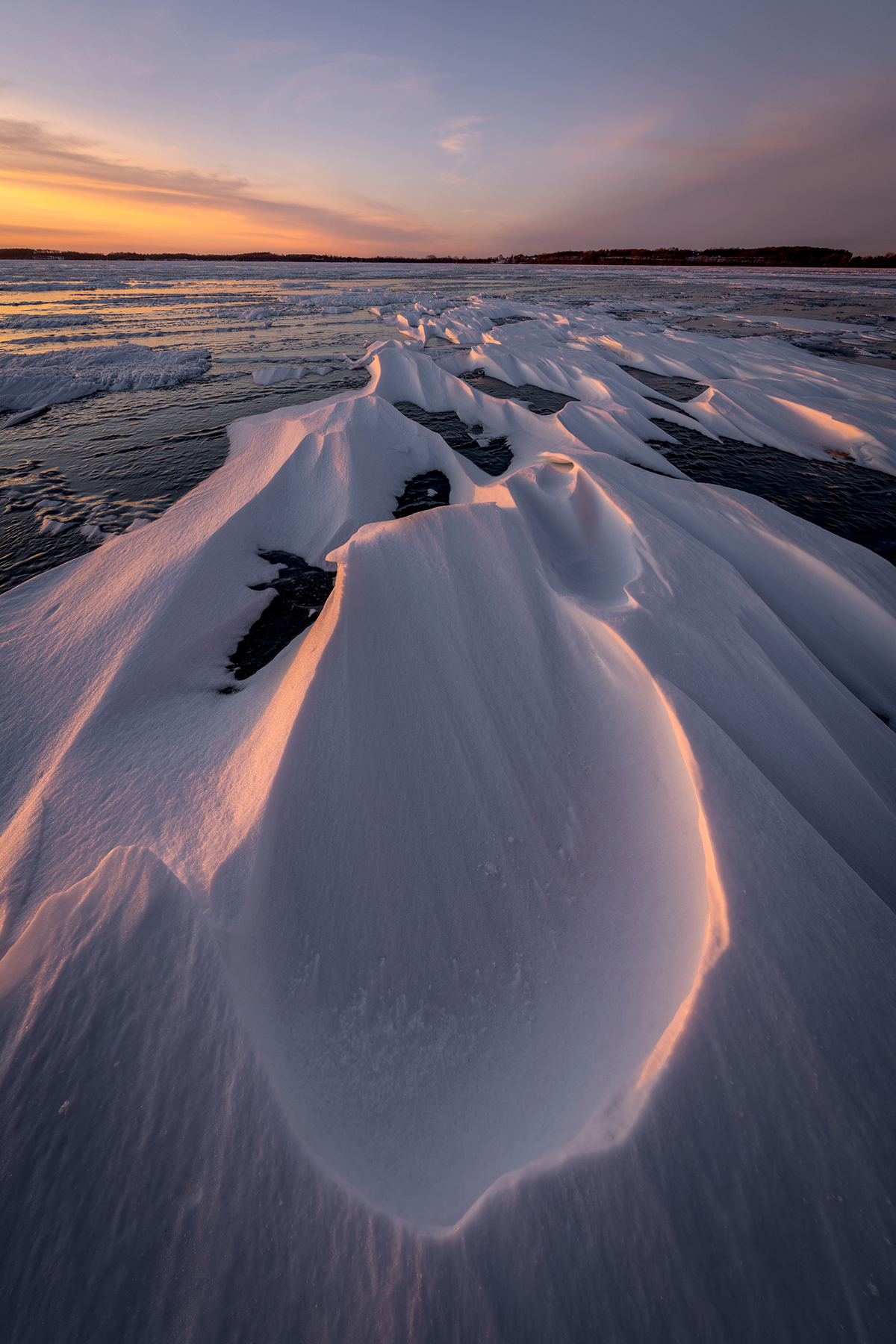
On a frozen lake in Minnesota, Ian positioned the camera very low above the patterns in the snow. The patterns therefore occupy a large part of the frame and lead the eye toward the horizon. The foreground is not merely decoration; it is the entry point into the photograph.
Shape lines and perspective deliberately
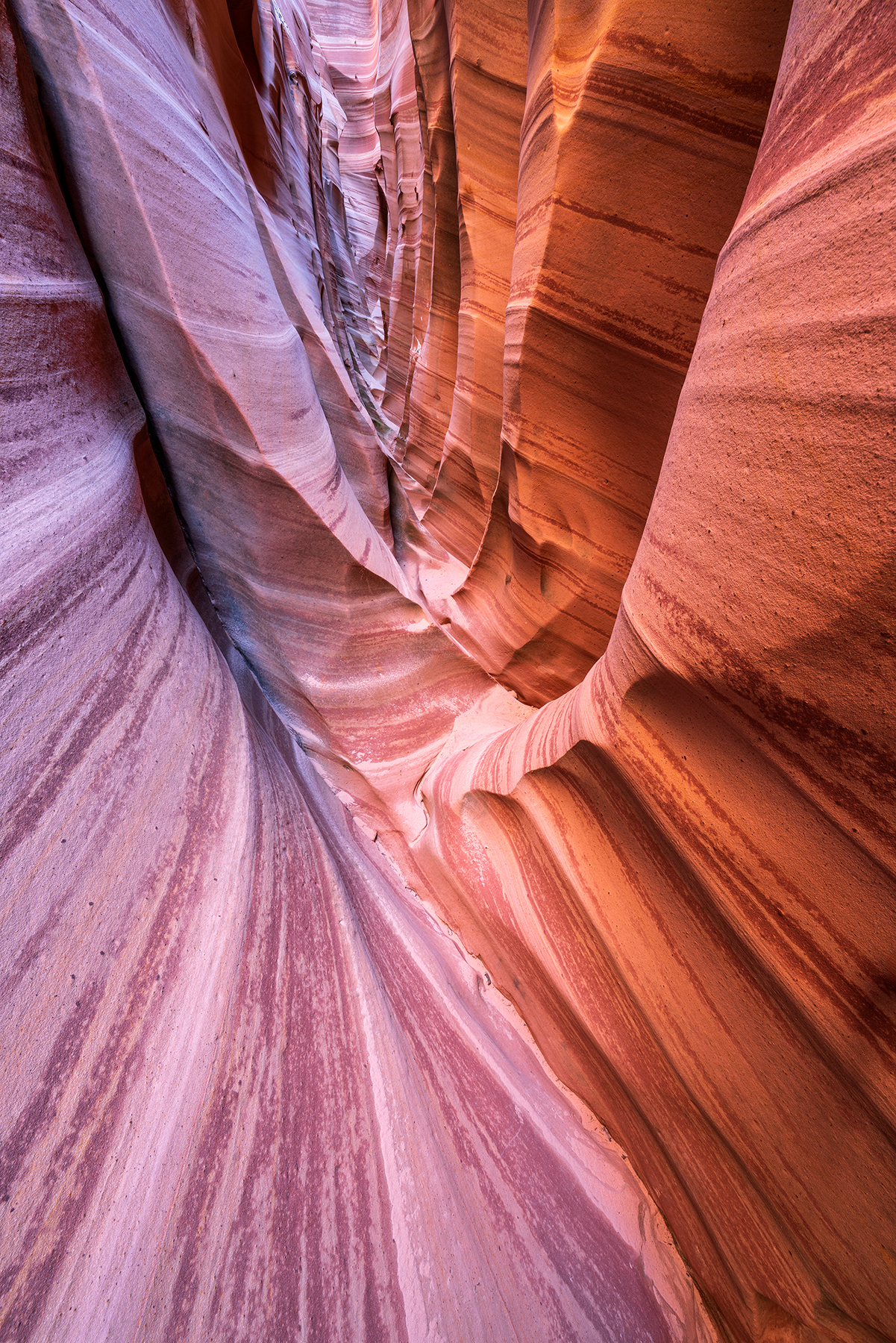
The wide angle of view works not only in open landscapes. In confined spaces in particular, it can create a strong graphic effect. In a narrow canyon in Utah, Ian uses the perspective of 12 mm to make sandstone lines run diagonally through the frame. The rock formations seem to converge in the distance, creating movement and depth.
Perspective distortion is not necessarily a mistake. It is caused primarily by camera position, distance and tilt. In Ian’s images, it becomes a deliberate part of the visual language: nearby shapes can appear large, and lines can diverge or converge. What matters is that the effect supports the subject.
Look for lines that lead into the scene from the edge of the frame.
Check all four corners of the frame: at 12 mm, distracting elements can enter the image particularly easily.
Change the camera position first before correcting the composition only with the zoom ring.
Keep the camera as level as possible when photographing architecture if converging verticals are not meant to be part of the design.
F2.8 for night landscapes and astrophotography
Many of Ian’s images are made before sunrise, after sunset or under a starry sky. In these situations, the constant F2.8 aperture is especially helpful. It lets more light reach the sensor and therefore allows shorter shutter speeds or lower ISO settings than a smaller aperture.
For an aurora photograph in Iceland, Ian shot at F2.8, ISO 3200 and a 15-second exposure. The 12 mm focal length provided enough room for ice formations and reflections in the foreground while allowing the aurora to occupy a large part of the sky.
To keep stars sharp, focus should be checked regularly during the night. You can find further information in our guide to Astro Focus Lock. If you are particularly interested in the aurora, the story The Hunt for the Northern Lights shows how planning, weather and patience work together.
Practical tip: Start with the aperture at F2.8 for stars and auroras. Then check the histogram and star sharpness and adjust shutter speed and ISO to the movement in the sky.
An ultra-wide-angle lens for travel
Fast ultra-wide-angle zoom lenses are challenging to design. Large, strongly curved front elements can quickly increase weight and dimensions. The TAMRON 12-20mm F2.8 is 119.3 mm long and weighs 570 g for Sony E and 585 g for Nikon Z. For Ian, this is a practical advantage: less weight in the camera backpack means more energy for hiking, exploring and photographing.
The zoom range, limited to 20 mm, contributes to the compact design. Ian prefers to work at the wide end anyway, but can tighten the composition up to 20 mm when needed. Because of its curved front element, the lens has no conventional front filter thread. Instead, filter sheets can be inserted into the integrated holder at the rear of the lens.
If you regularly use conventional screw-in or slot-in filters in front of the lens and are looking for a less extreme but more versatile zoom range, our guide to the right lens for landscape photography includes a detailed comparison of the 12-20mm F2.8 and the 16-30mm F2.8 G2.
Sharpness, backlighting and focus stacking
With such a wide angle of view, even the outermost areas of the image contribute to the composition. The eye can travel across a large area, so soft corners, color fringing or distracting reflections are especially noticeable.
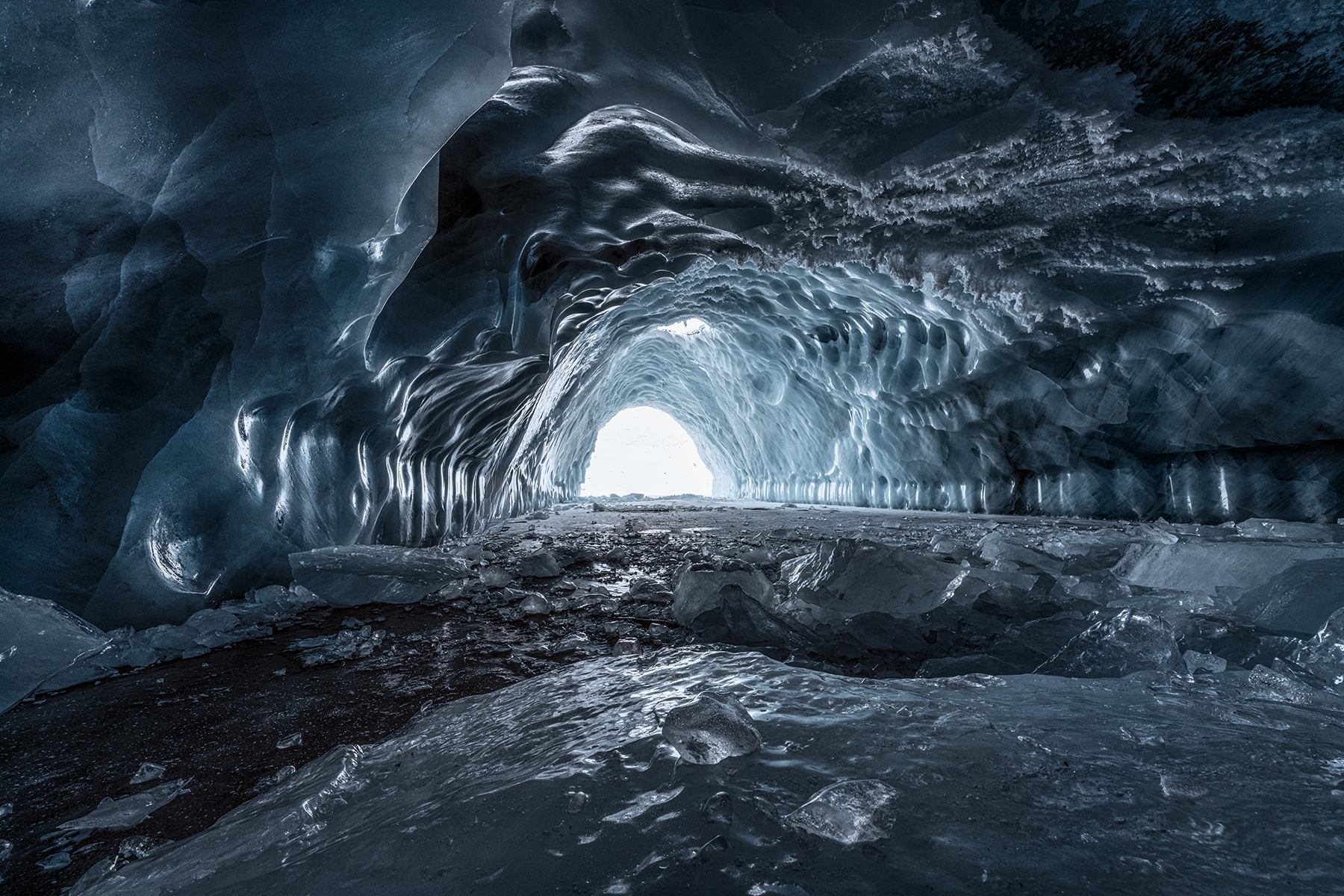
In an ice cave in Alaska, Ian photographed a challenging scene with a dark interior and a much brighter entrance. In his experience, the 12-20mm F2.8 delivers high resolution across the image area and zoom range. Aberrations, ghosting and flare also remain well controlled in his backlit shots.
When a very close foreground and a distant background both need to appear sharp, a single exposure is not always enough, even with a wide-angle lens. Ian then uses focus stacking: he takes several images at different focus points and later combines the sharp areas into one image. The camera, exposure and framing must remain unchanged.
Photographing sun stars
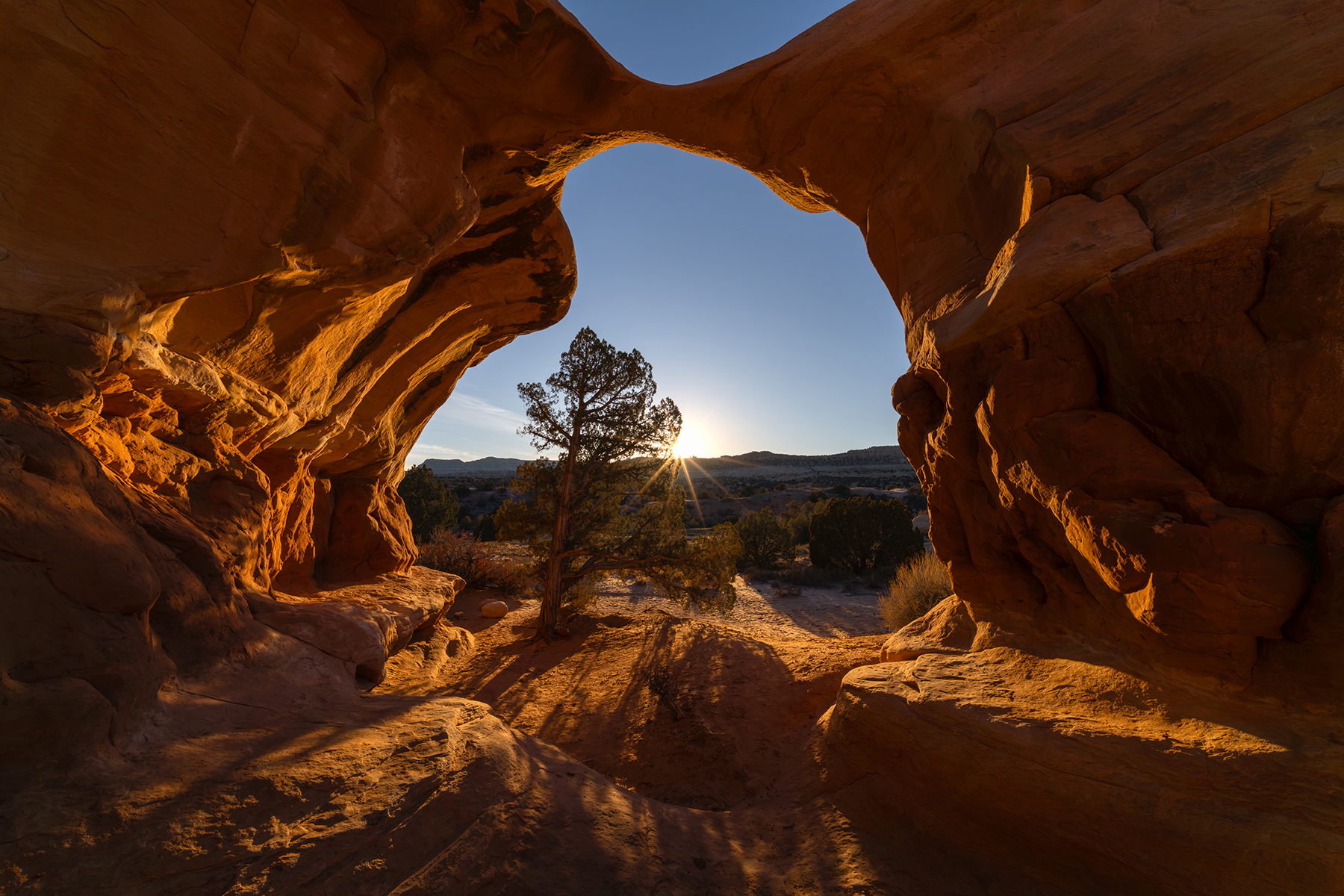
Ian often incorporates the sun directly into his landscape compositions. Stopping down the aperture can turn a point light source into a graphic star. The TAMRON 12-20mm F2.8’s 12-blade aperture produces a distinctive 12-point sun star.
To reduce reflections and make the star more distinct, Ian partially blocks the sun with a branch, mountain edge or rock formation. In Utah, he shot at F16 and positioned the setting sun behind a tree visible through a sandstone arch. Even a minimal change in camera position determines how strongly the rays become visible.
Move close and change proportions
A particular strength of an ultra-wide-angle lens appears when the view is directed not only toward the horizon but also directly in front of the front element. The minimum focusing distance is 0.18 m at 12 mm and 0.28 m at 20 mm. This does not replace a macro lens, but it allows unusually close perspectives with plenty of surrounding environment visible.
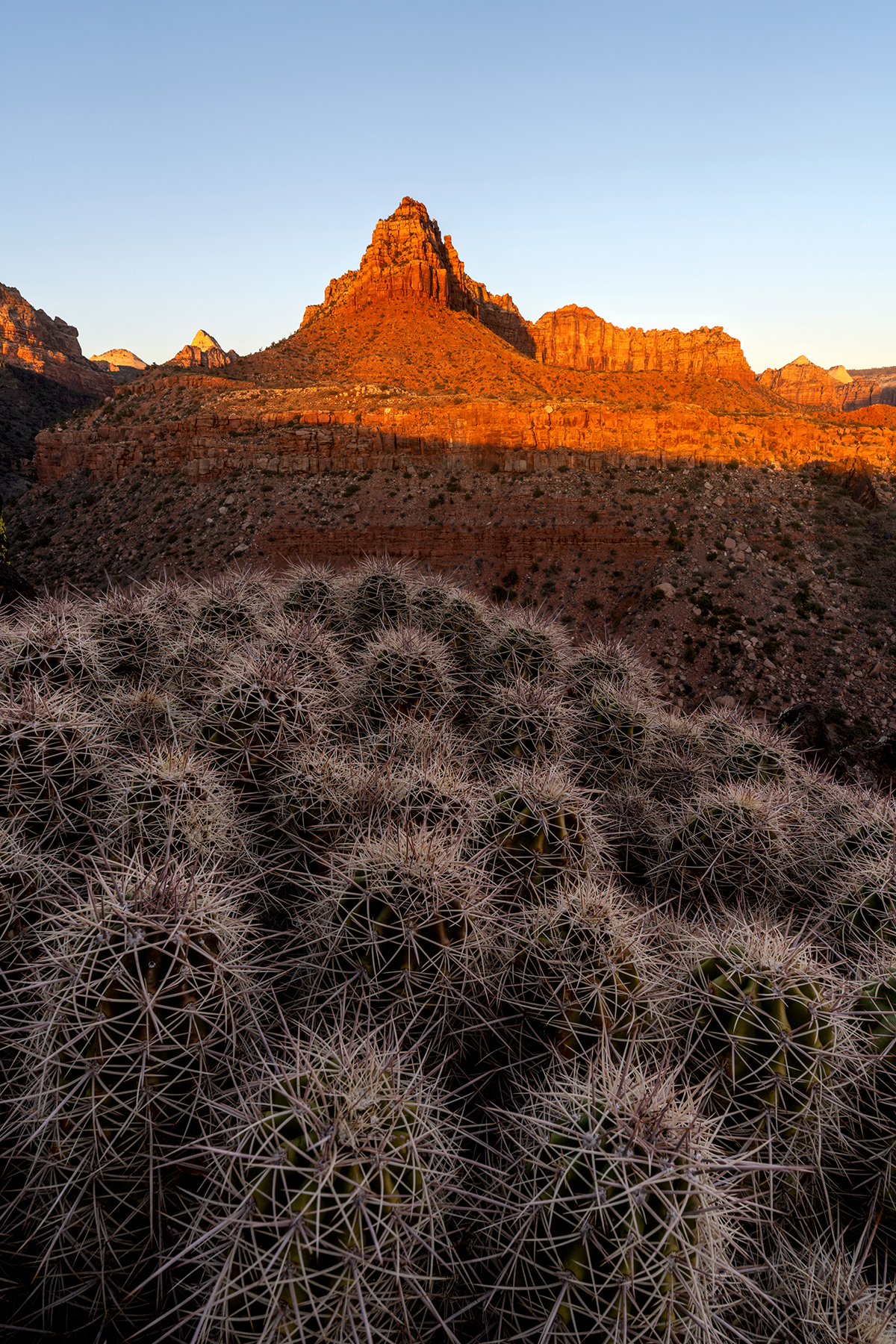
In the Utah desert, Ian positioned the camera close to small cacti. Although he zoomed to 20 mm for this shot, the plants appear much larger because of the short shooting distance and structure the entire lower part of the frame. To keep both the cactus and landscape sharp, he combined multiple focus planes using focus stacking.
Composition rule: At 12 mm, even a few centimeters can change proportions. Move the camera forward, backward, up and down until foreground, middle ground and horizon work together.
Overview of shooting settings
The EXIF data show how differently Ian uses the ultra-wide angle. They are starting points, not fixed recipes: light, subject movement, desired depth of field and camera sensor determine the final settings.
Typical mistakes when shooting with an ultra-wide angle
No clear foreground: Without a visual entry point, the wide scene can look flat and arbitrary.
Too many elements in the frame: A wide angle of view requires more order, not more subjects.
Unchecked corners: Branches, feet, tripod legs or bright areas can easily enter the frame unnoticed.
People at the edge: Bodies and faces can look unnaturally stretched because of the perspective.
Zooming instead of moving: The strongest visual effect often comes from changing the height or the distance to the foreground.
What subjects is a 12-20mm ultra-wide-angle lens suitable for?
Landscape photography: large areas of sky, strong foregrounds and visible depth layering.
Astrophotography and auroras: lots of sky in the frame and an F2.8 aperture throughout the zoom range.
Architecture and interiors: large buildings or tight spaces when little distance from the subject is possible.
Travel and outdoor: an exceptional angle of view in a relatively compact package.
Video: wide establishing shots, dynamic movement and shooting in confined situations.
You can find more information on choosing different focal lengths in our overview of the right lens for landscape photography.
Frequently asked questions about ultra-wide-angle photography
A different view of the landscape
Ian Plant’s images show that an ultra-wide-angle lens is not only intended for huge landscapes. Its strength lies in the relationship between the image planes. At 12 mm, a piece of ice can become a monumental foreground, a small cactus can gain unexpected presence, and an aurora can unfold its entire curve above the landscape.
For Ian, the TAMRON 12-20mm F2.8 therefore becomes a preferred lens for compositions that connect foreground and background, as well as for sunrises, sunsets and night landscapes. He plans to combine it with the TAMRON 25-200mm F2.8-5.6 G2. With two relatively compact lenses, he can cover a range from extremely wide perspectives to considerably tighter landscape compositions.
This combination fits his working style: carry less, explore more and give image-making as much room as possible. Discover the TAMRON 12-20mm F2.8 or complement it with the TAMRON 25-200mm F2.8-5.6 G2.
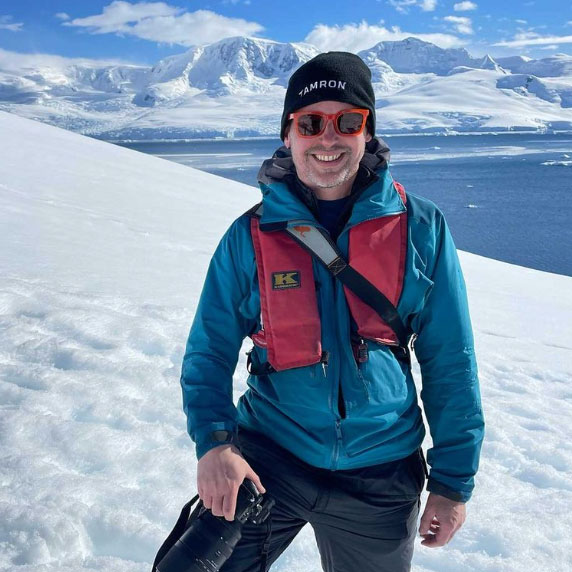
About the author: Ian Plant
Whether at the edge of an active volcano or documenting highly endangered species, Ian Plant has traveled the world for more than twenty years to photograph the beauty of our planet. Through his books, instructional videos and workshops, he aims to inspire people about photography and nature. Among other things, he teaches for KelbyOne and founded Photo Masters, a platform for photographic learning and inspiration.
TAMRON products mentioned in this article


16-30mm F/2.8 Di III VXD G2
Model A064