
Feb 10, 2026 / Agnes Anna Sadowski
Two Weeks, Four States, Endless Vastness
Two Weeks, Four States, Endless Vastness – Exploring the U.S. Southwest with the 25–200mm
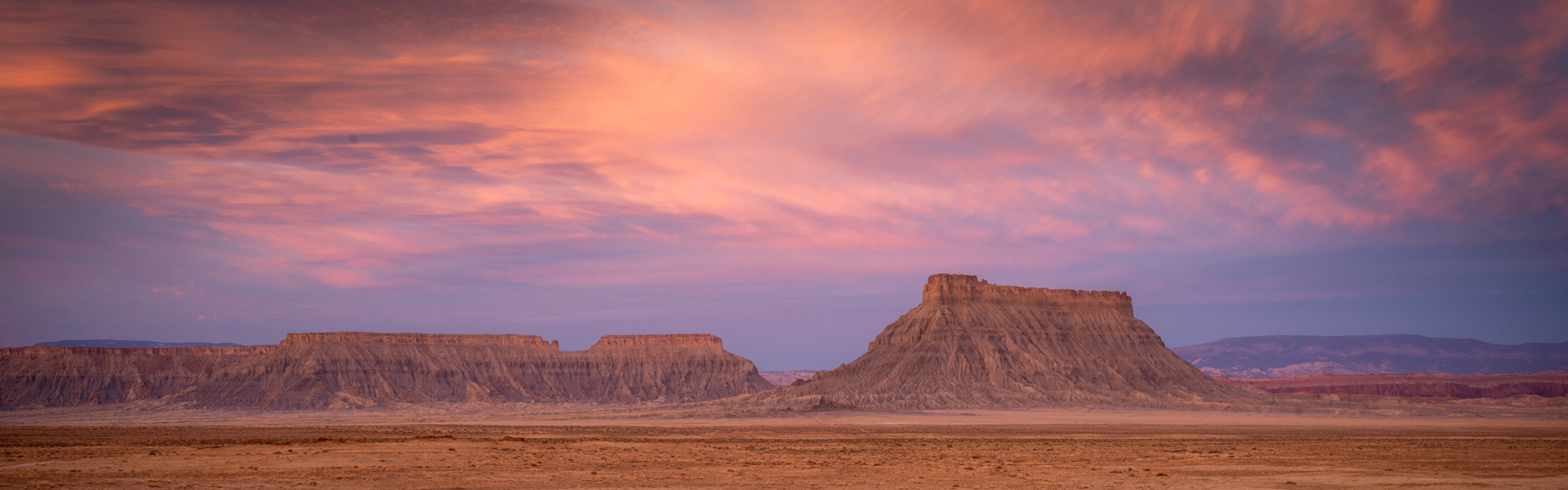
Nevada, Utah, Arizona, California – for a long time, Agnes Anna Sadowski had dreamed of the American Southwest with its vast landscapes, spectacular formations, and distinctive light. In October 2025, that dream became reality. In her luggage: the lightweight TAMRON 25–200mm F/2.8–5.6 Di III VXD G2. Here, she shares how she experienced the journey.
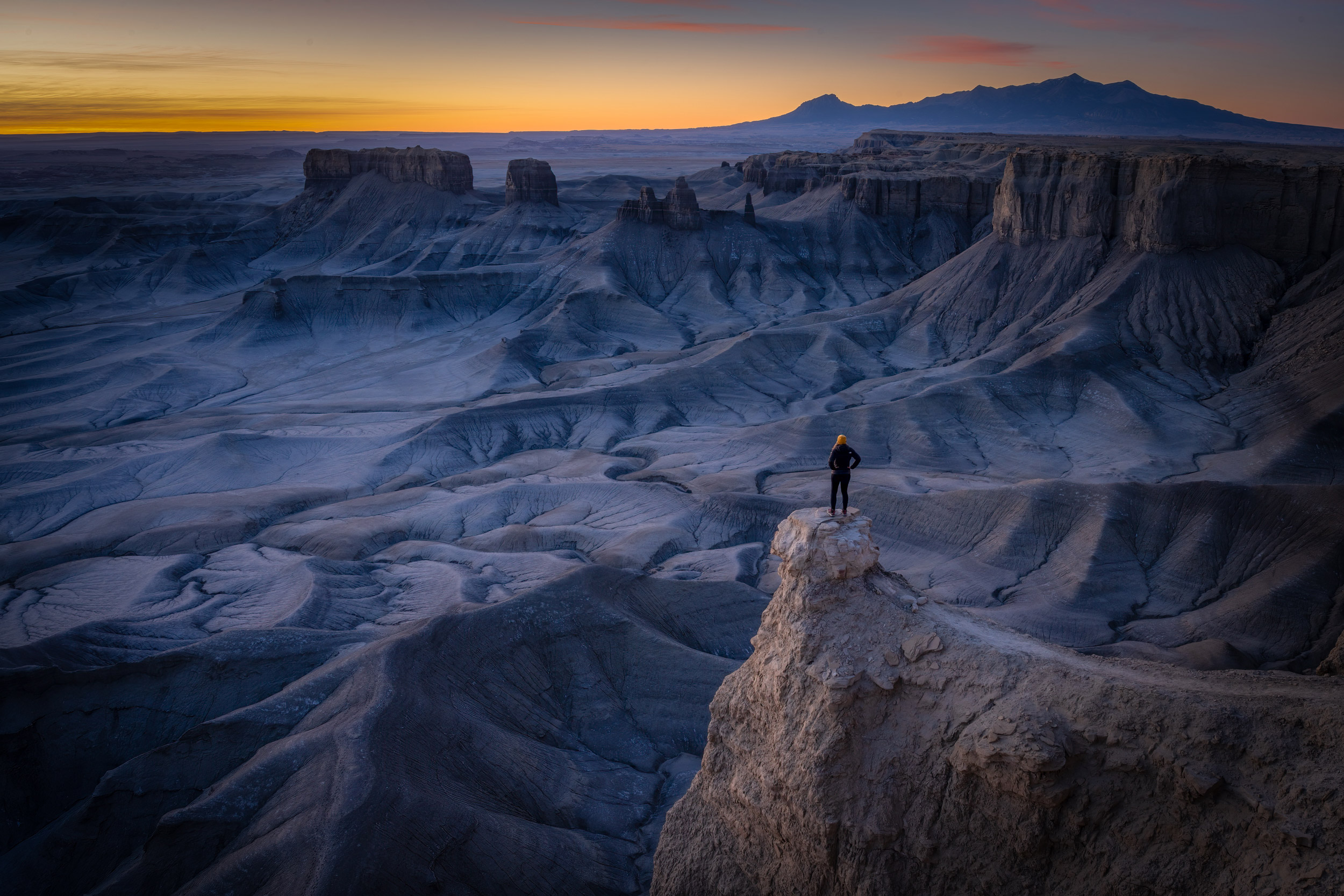
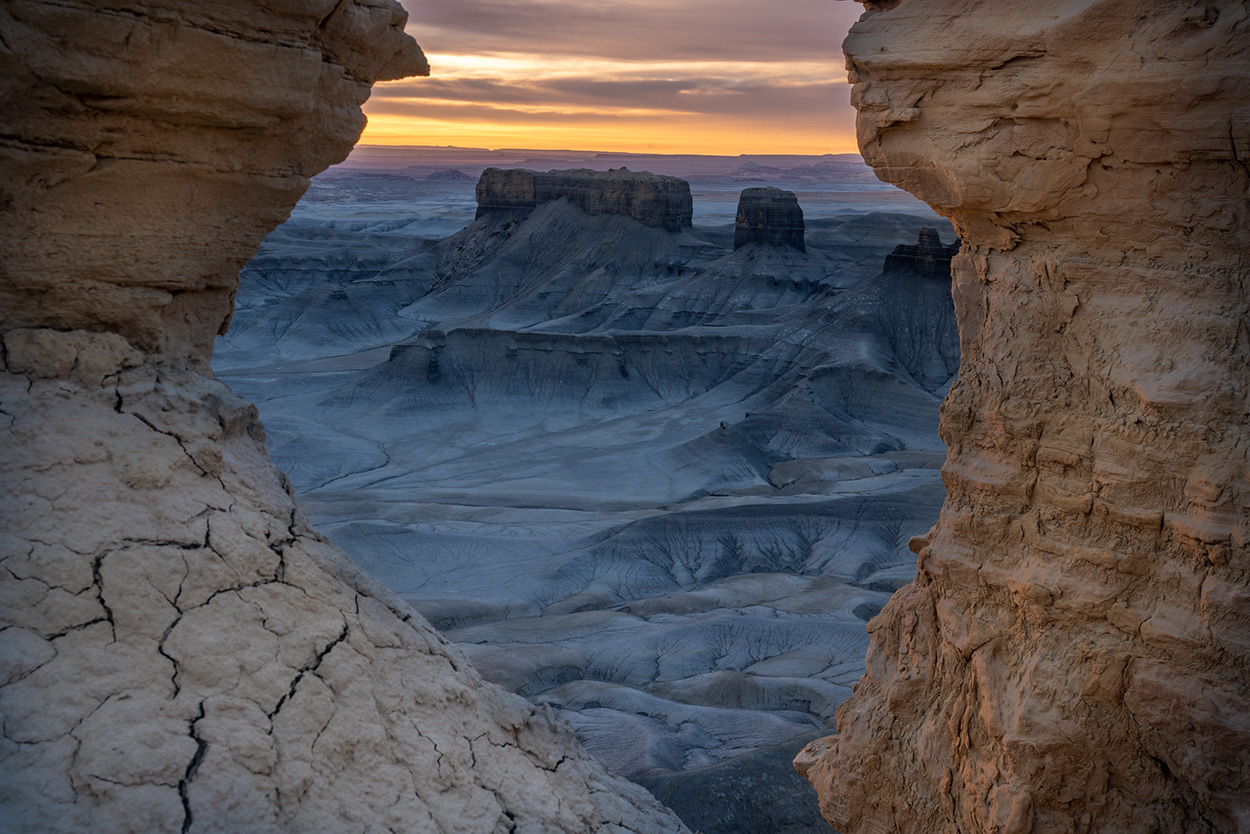
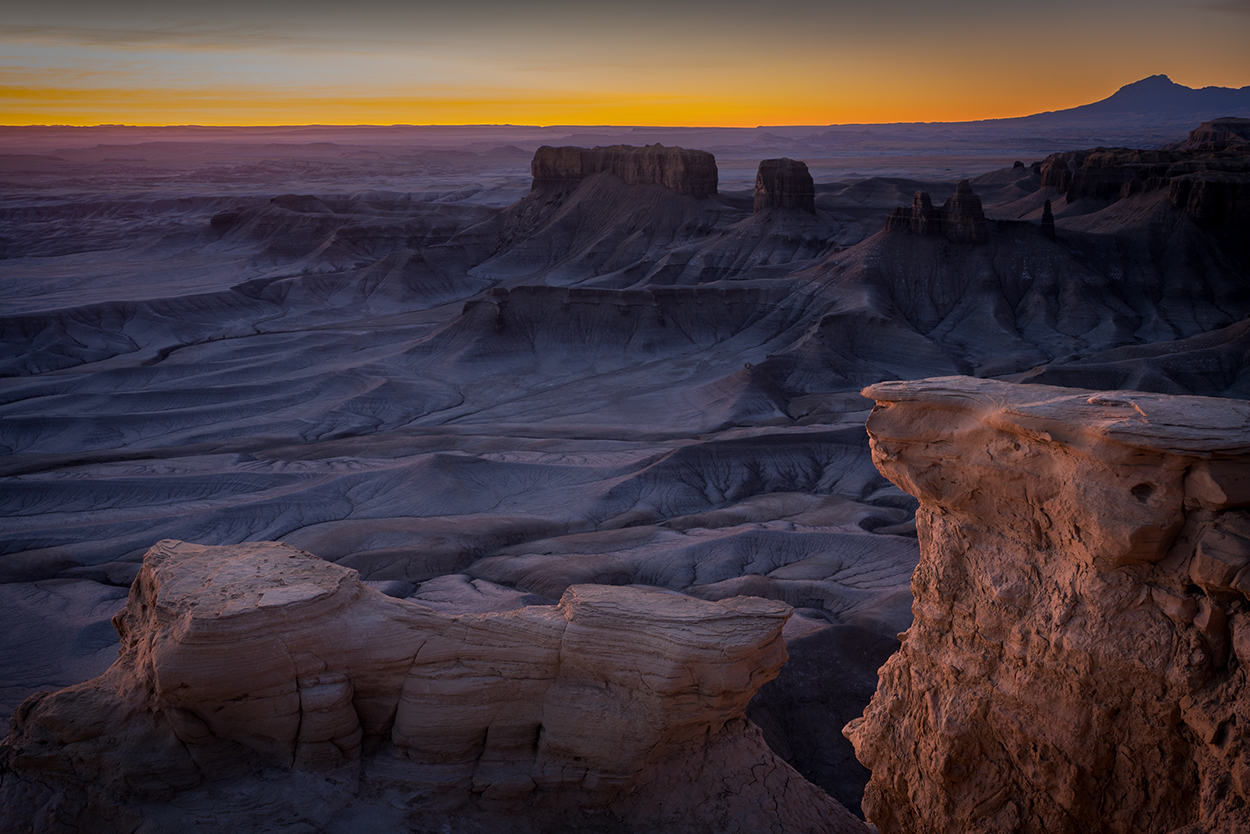
It feels as if I’m on another planet. Gray-blue semi-deserts, surreal rock formations, and a light that changes practically every minute. The “Moonscape Overlook” truly lives up to its name.
This moment in the legendary Badlands of Utah is one of the photographic highlights of my journey through the U.S. Southwest. In just two weeks, I travel through four states: Nevada, Utah, Arizona, and California. Accompanying me is Tamron’s new all-in-one zoom lens, the 25–200mm F/2.8–5.6 Di III VXD G2, which I have the opportunity to test extensively in combination with my Sony A7 IV.
A Deliberately Chosen All-in-One Zoom
The compact 28–200mm travel zoom had already been a faithful companion on previous trips. I’m therefore all the more pleased that Tamron has expanded the wide-angle range to 25 mm in its successor while maintaining the low weight and compact design.
This is crucial on this journey: in narrow canyons or on sandy dunes, changing lenses is not only difficult but sometimes simply impossible. The 25–200mm covers nearly all subjects without compromises in framing or the risk of sand entering the sensor due to frequent lens changes.
Autumn Canyon Landscapes
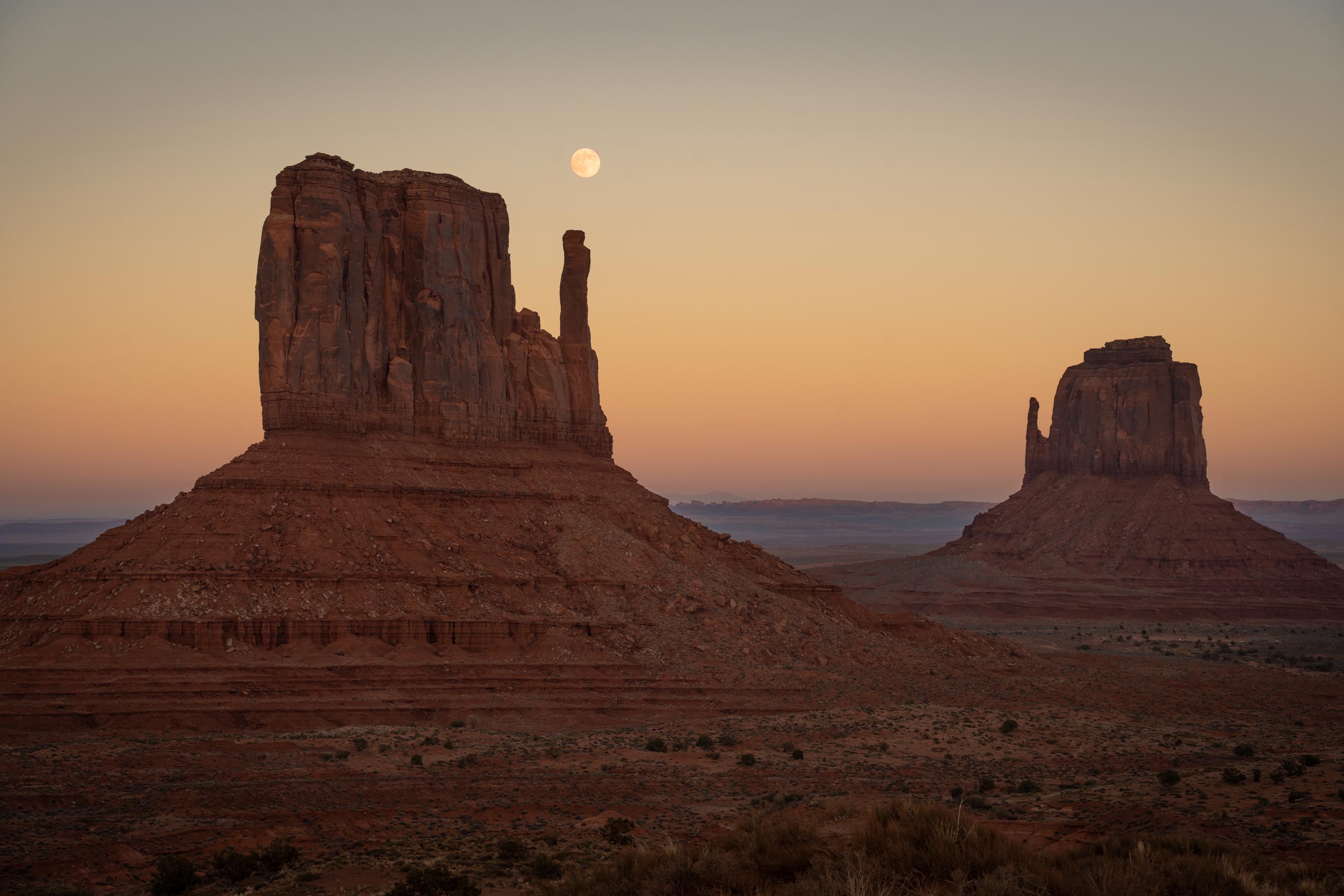
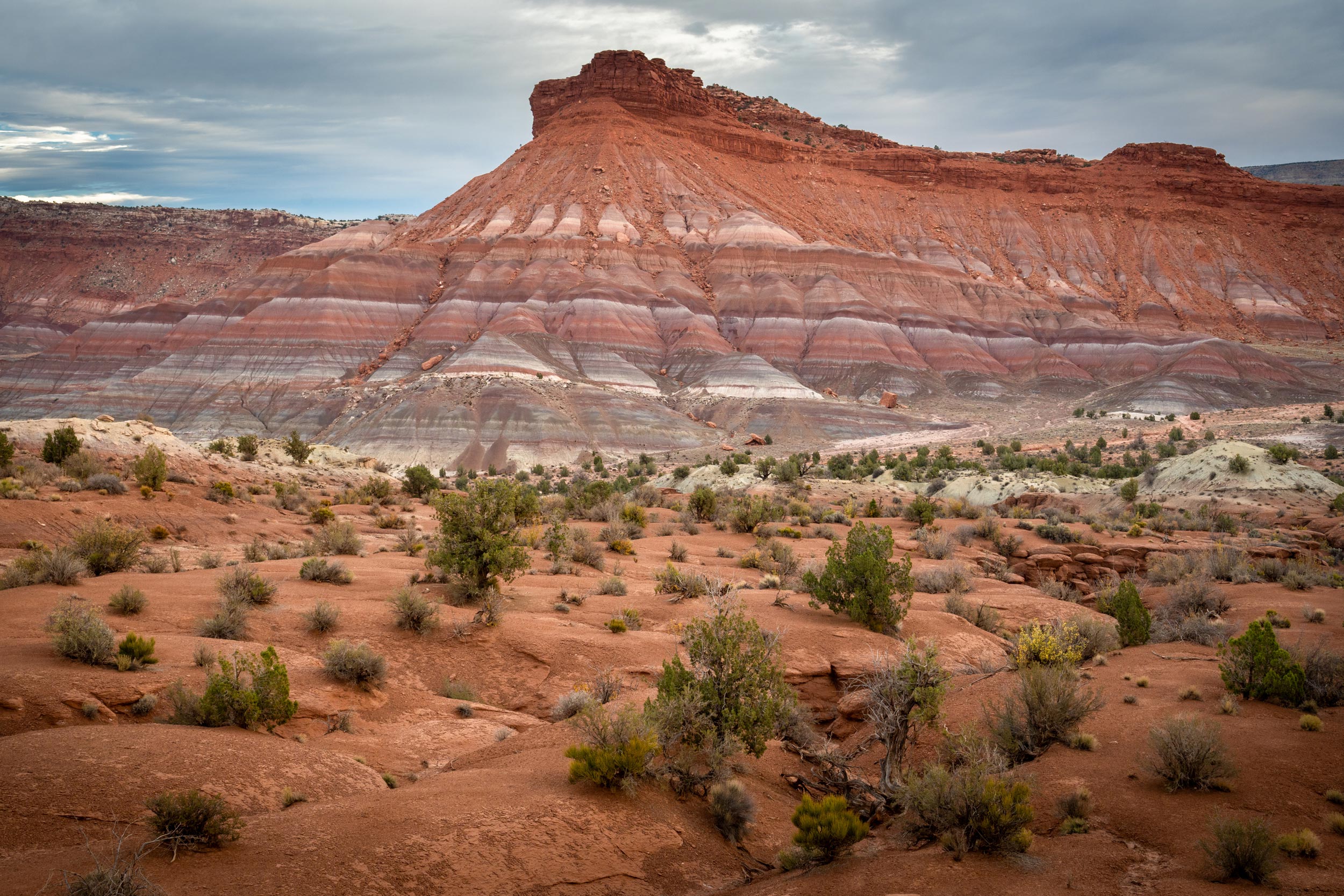
After arriving in Las Vegas, I head straight to Utah by rental car, to the Grand Staircase–Escalante National Monument. It’s a vast, largely undeveloped protected area, accessible in many places only via off-road tracks.
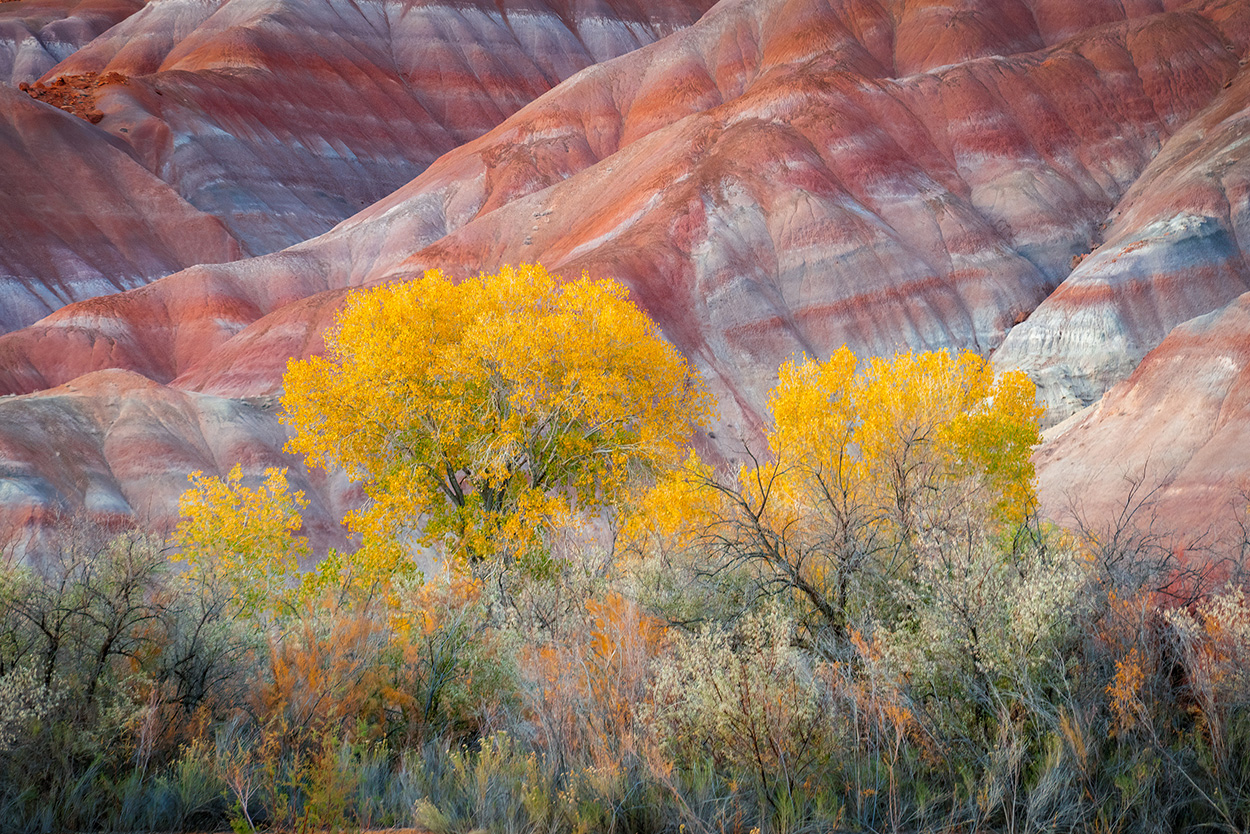
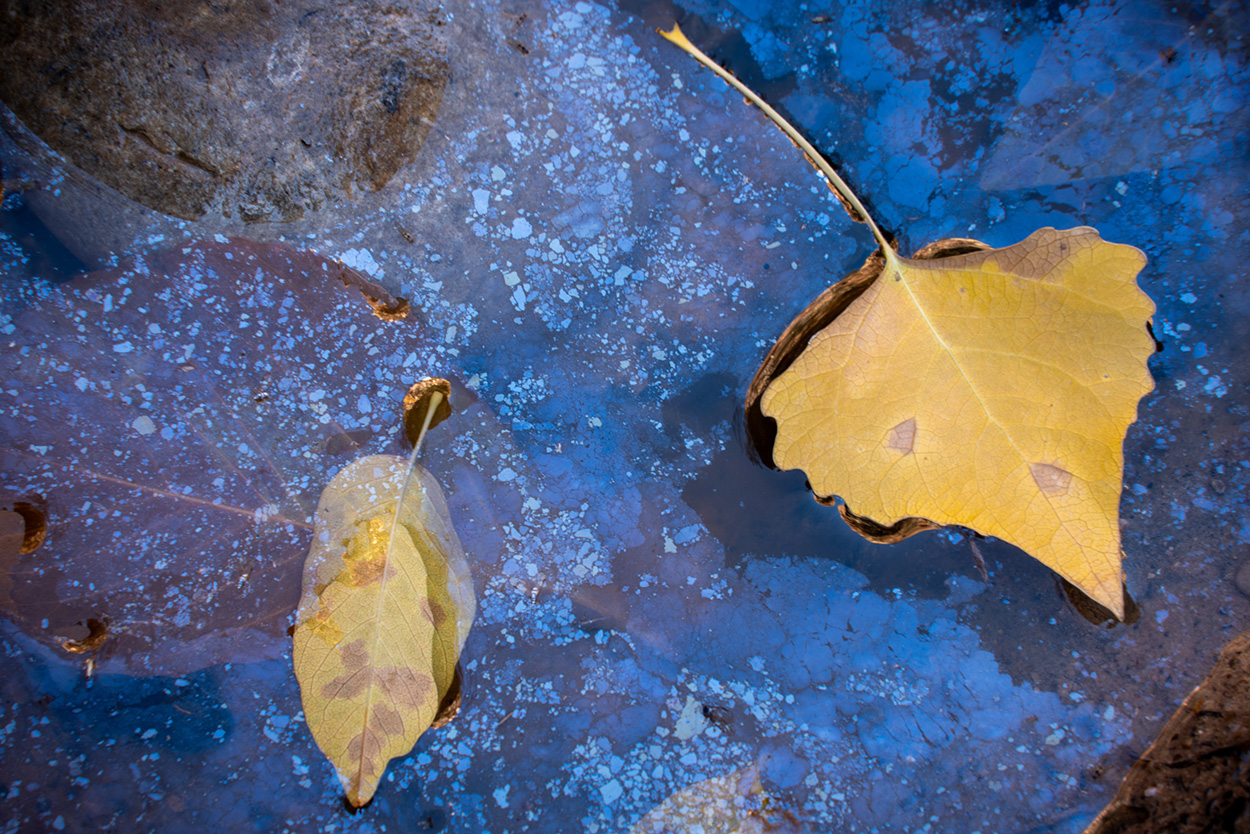
The autumn colors reach their peak with bright yellow cottonwood trees set against the reddish canyon landscapes. That’s exactly what I want to capture. I switch between wide, open landscape shots and calmer detail images of the trees, often instinctively. The large focal length range helps me translate decisions quickly and stay in the flow.
Badlands: When the Light Sets the Pace
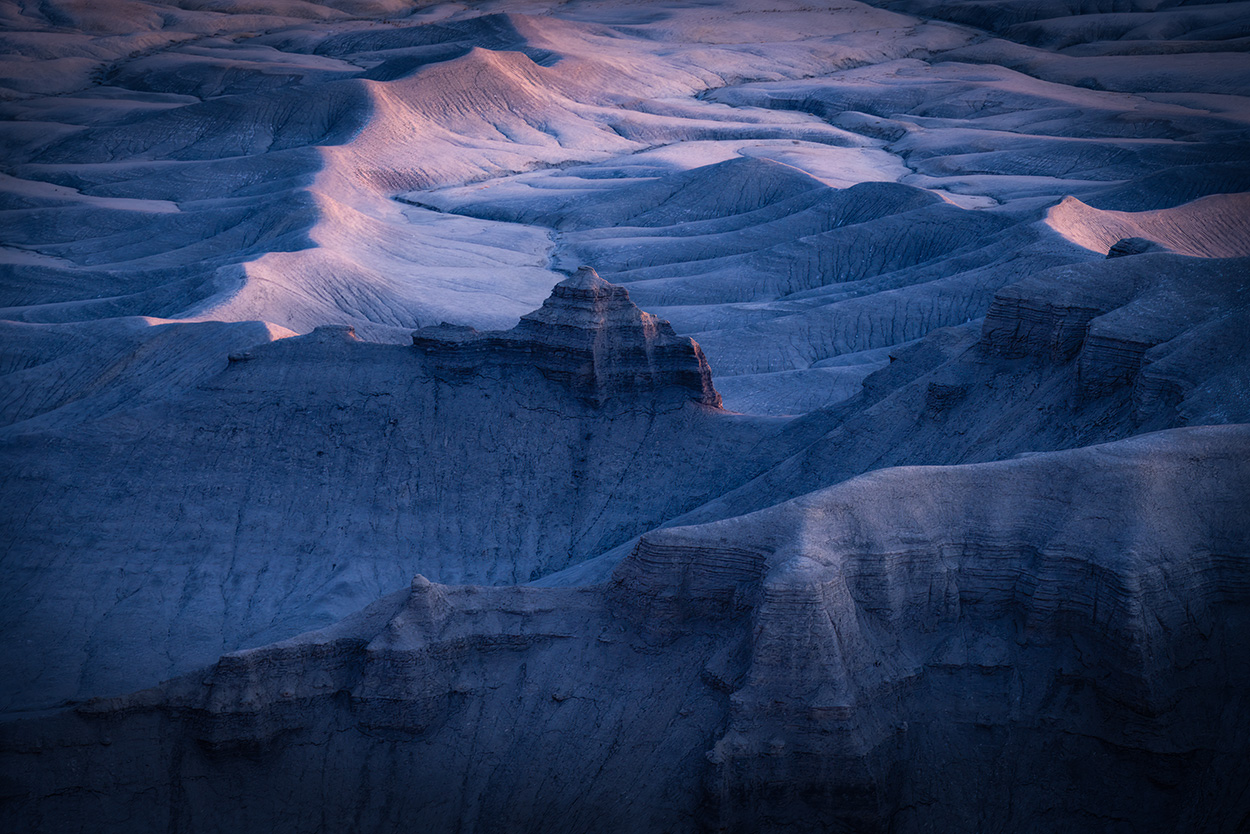
Farther north, near Capitol Reef National Park, the landscape changes abruptly. Gray-blue Badlands spread out before me with surreal geological formations, like a backdrop from another world. It’s no coincidence that one of the most spectacular viewpoints there is called Moonscape Overlook. The scenery truly reminds me of a lunar landscape.
The photographic possibilities are nearly endless—almost overwhelming. The early morning light changes from minute to minute, sometimes soft and diffuse, sometimes harsh and high-contrast. With the 25–200mm, I can flexibly capture these shifting moods without losing precious time to lens changes—from sweeping landscape panoramas to graphic details of erosion patterns. Photographically, this is the most intense part of my journey.
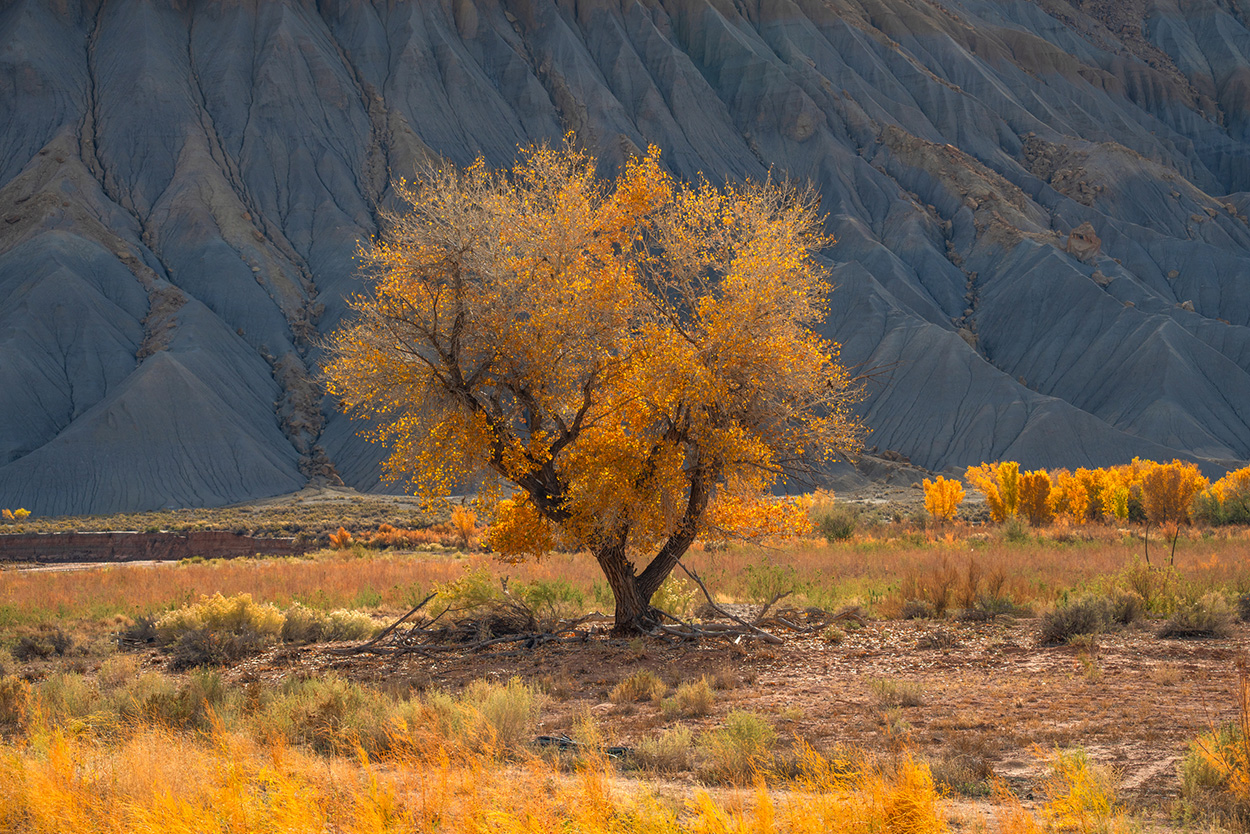
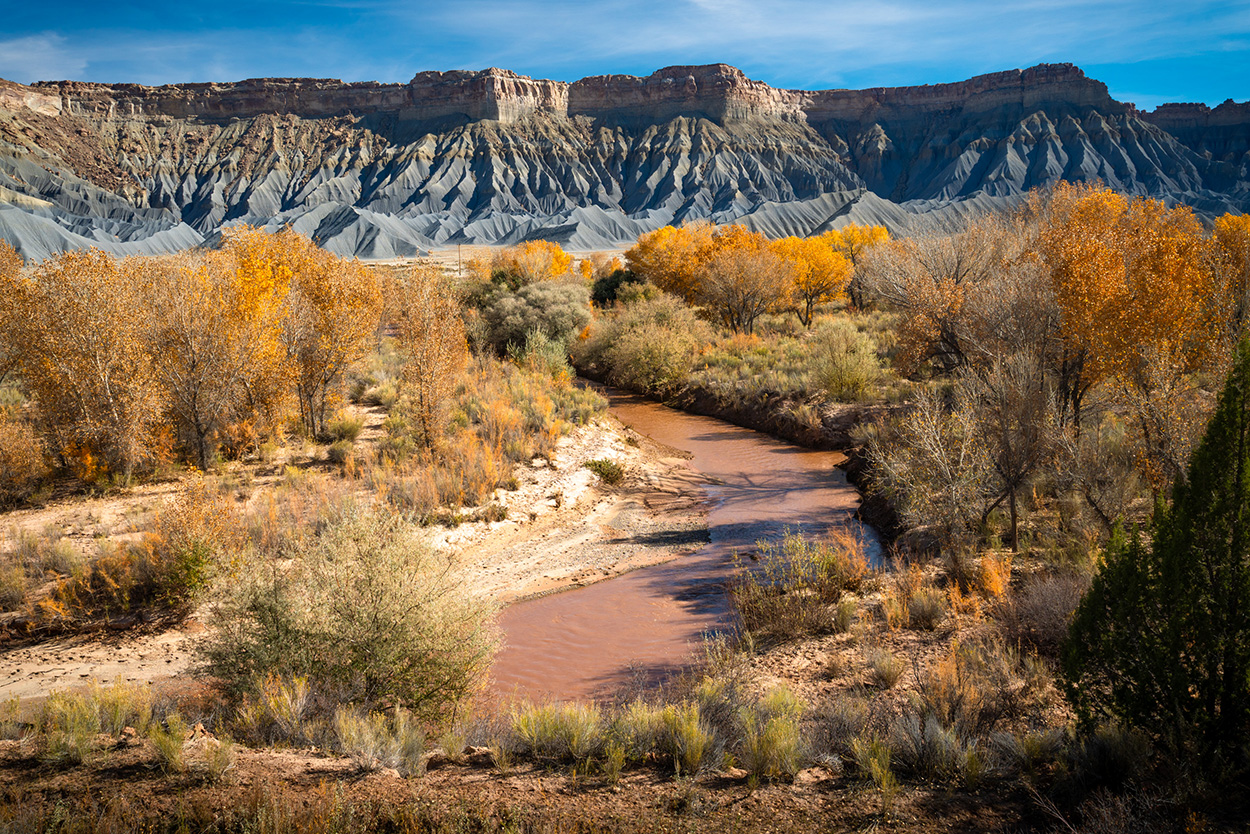
On earlier trips, such as to the Atacama Desert, I’ve already seen fascinating, barren landscapes. But here, I’m captivated by the strong contrast: stark, bluish rocks alongside the saturated autumn colors of the trees, radiating pure vitality. I’m utterly enchanted and could stay in this region forever. But the journey continues. I leave behind the dramatic monoliths, the desolate expanses, and the vividly blooming plants.
Slot Canyons: Working Under Constraints
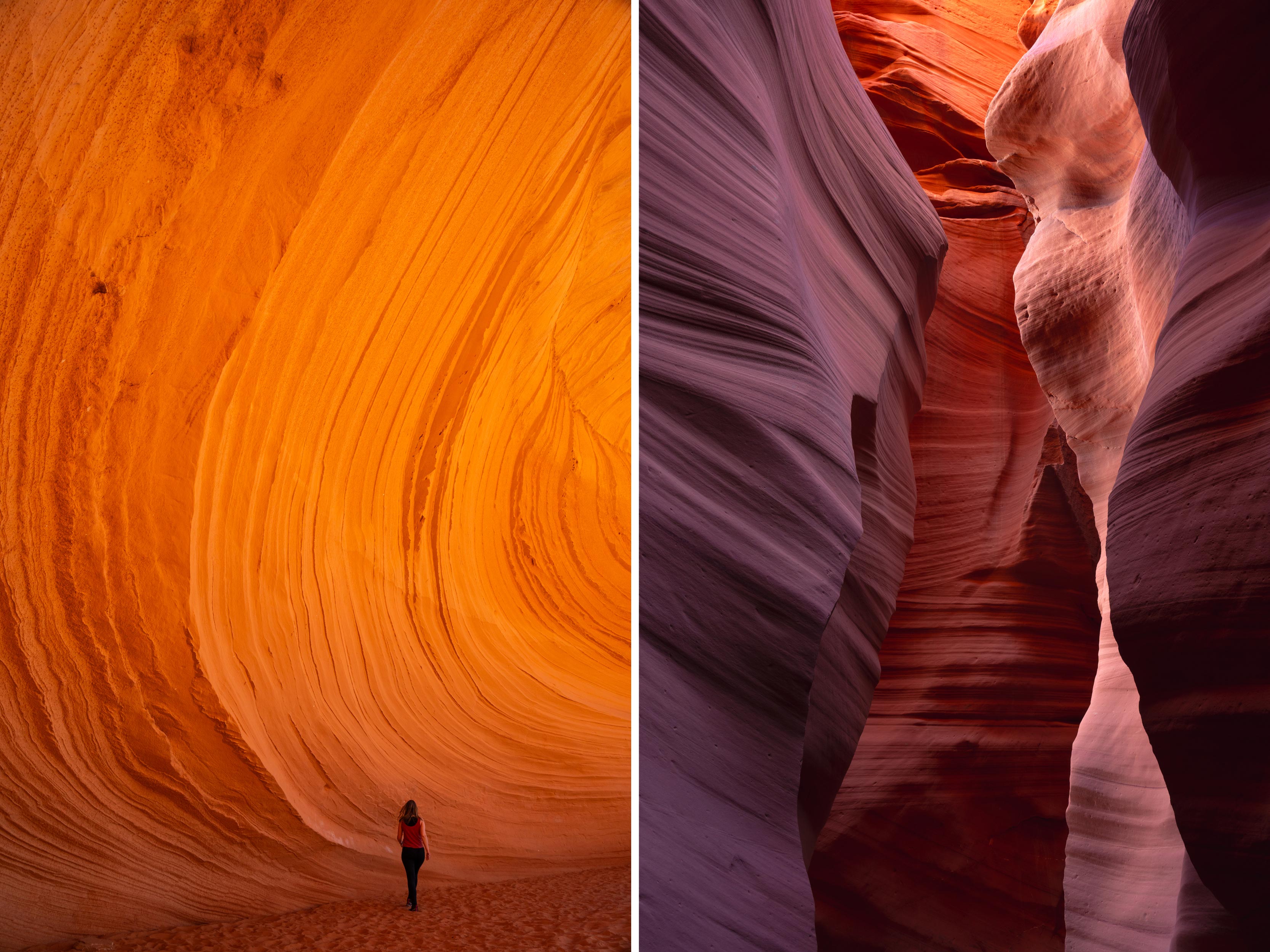
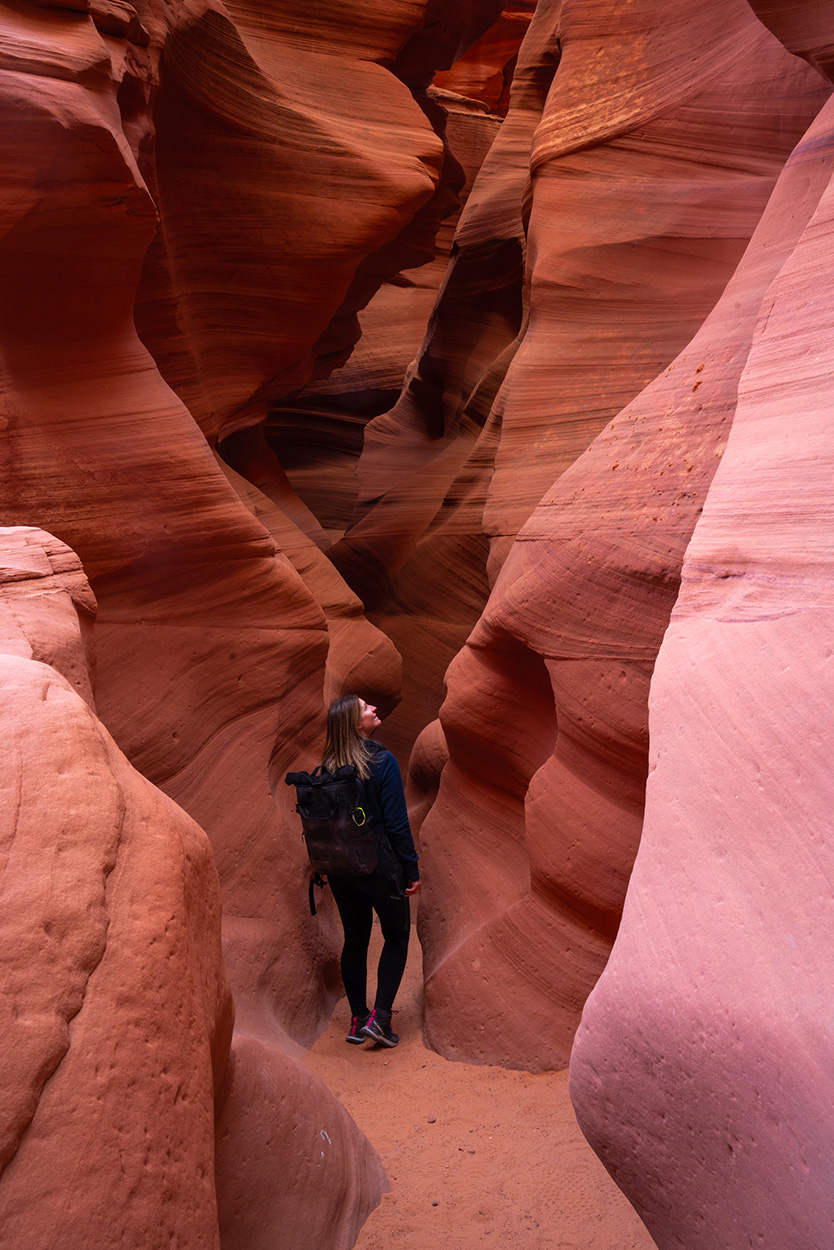
The route takes me through Monument Valley and onward to Arizona. My focus now is on the slot canyons—the narrow, deep rock gorges. I deliberately skip the well-known Upper Antelope Canyon, as it’s too crowded, and the coveted sunbeams—the spectacular shafts of sunlight—are only visible between May and September anyway. Instead, I choose the lesser-known Antelope Canyon X.
Like all areas of Antelope Canyon, this one is accessible only with a local Navajo guide. I opt for a special photography tour that allows significantly more time than standard guided visits.
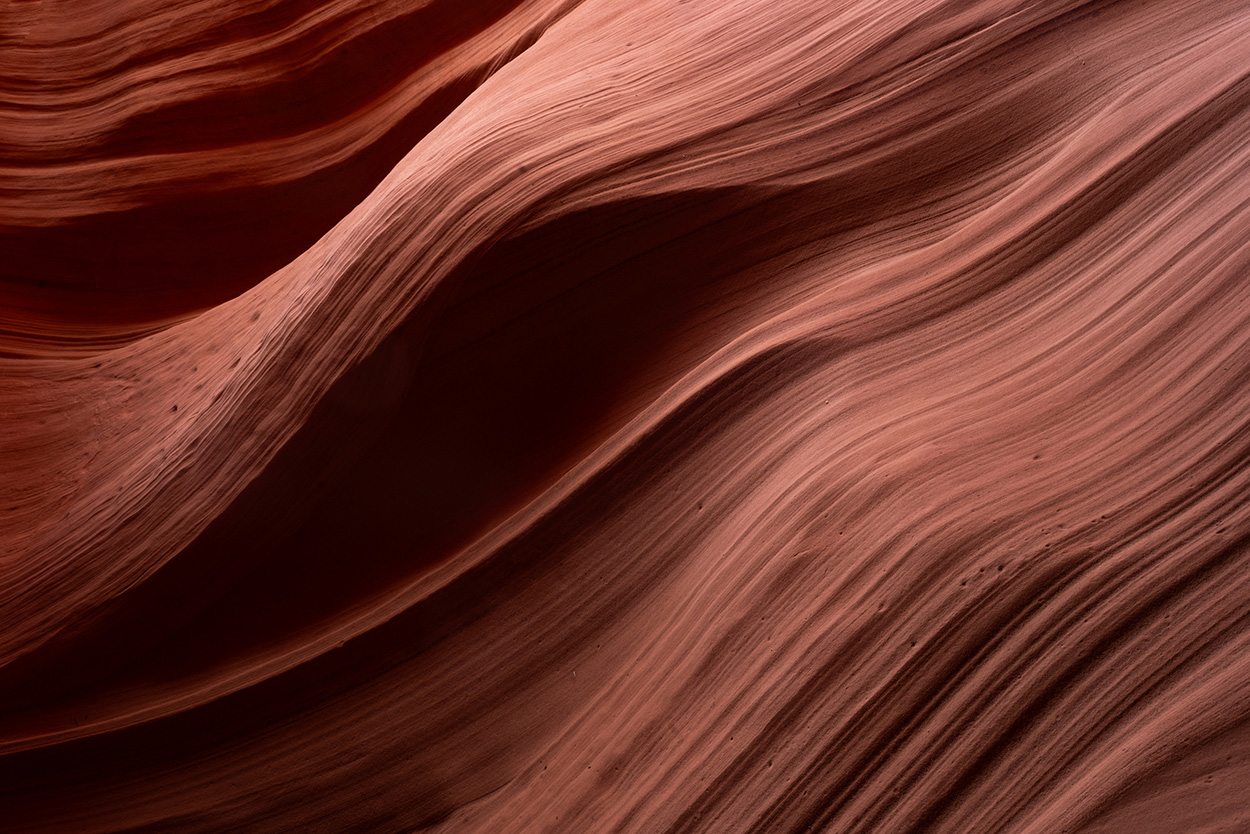
The flowing sandstone walls offer an enormous variety of subjects. In tight passages, a wide angle is essential; in other spots, stronger compression and isolated scenes call for the telephoto range. The 25–200mm is ideal here, as the paths are so narrow that you can barely squeeze through with a backpack—let alone want to change a lens.
Death Valley: Heat and Challenge
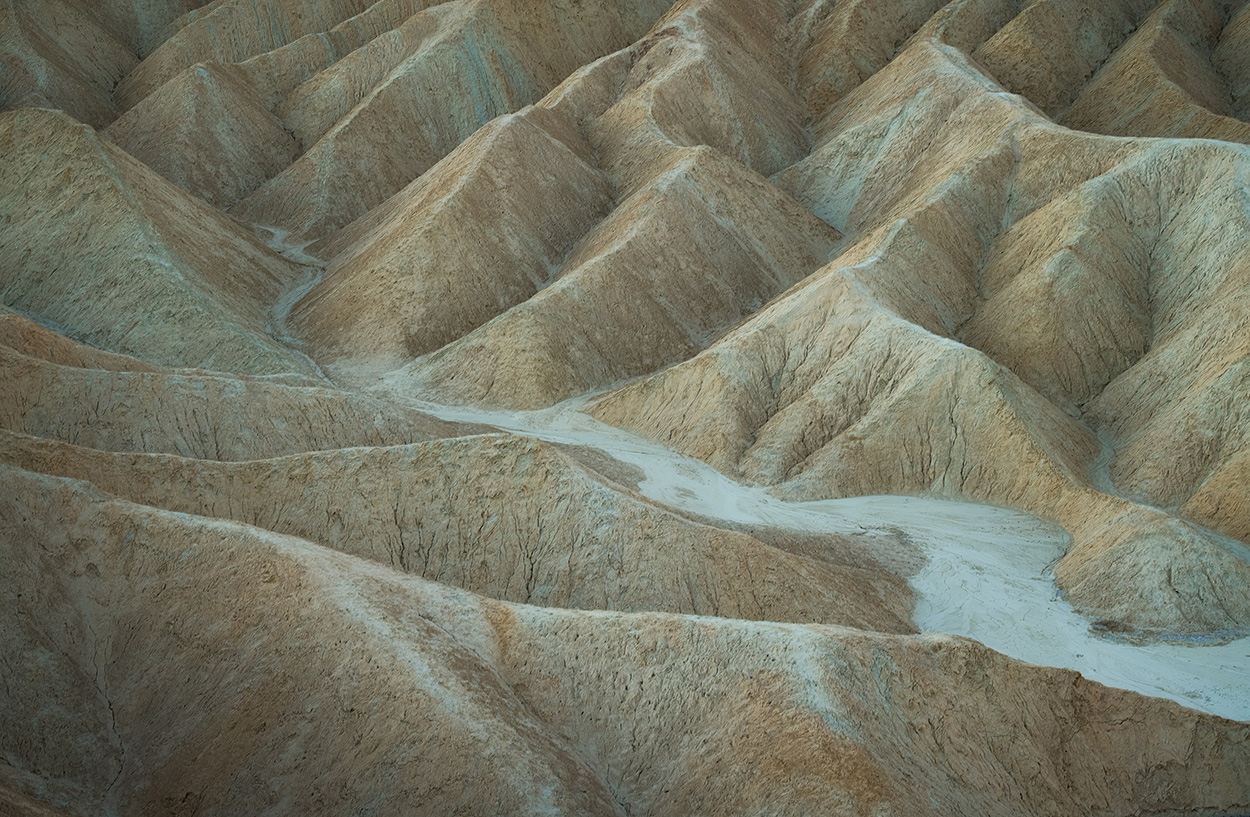
After a short detour to the beautiful Zion National Park, the final leg of the journey takes me to Death Valley. Even though it’s already November, the valley lives up to its name. The heat is still intense during the day, and scouting through the dune sand is exhausting. Anyone who wants to explore Death Valley National Park extensively for photography is therefore advised to visit during the cooler winter months between December and February.
My photographic yield on the first day is rather sobering. Despite the heat, I walk up and down the dunes to find good compositions away from the heavily tracked main paths. Finding compelling subjects remains a challenge.
Return and Reward
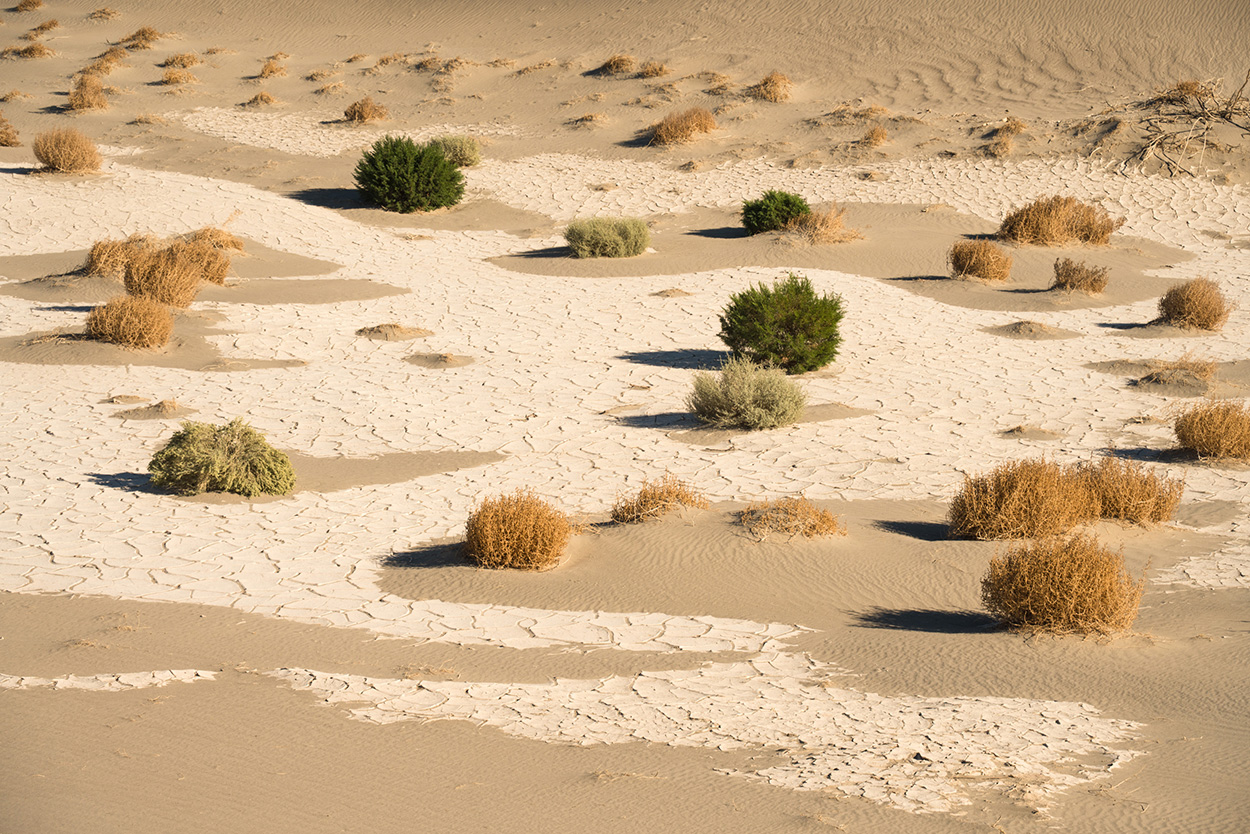
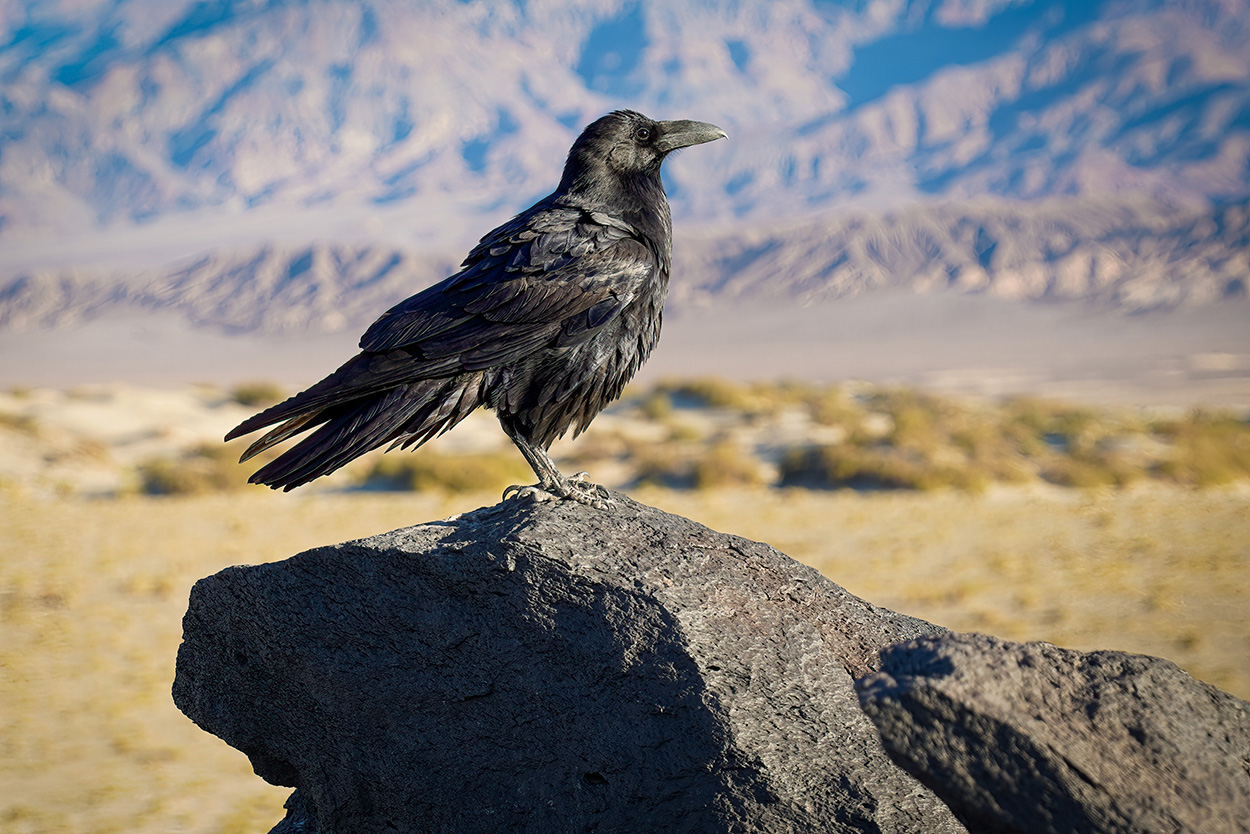
Early the next morning, I set out again and finally discover remote areas of the Mesquite Dunes, completely untouched. At last, the landscape feels like a true desert. As a bonus, a raven appears—an iconic symbol of Death Valley. Using the telephoto range, I’m able to photograph the bird nicely.
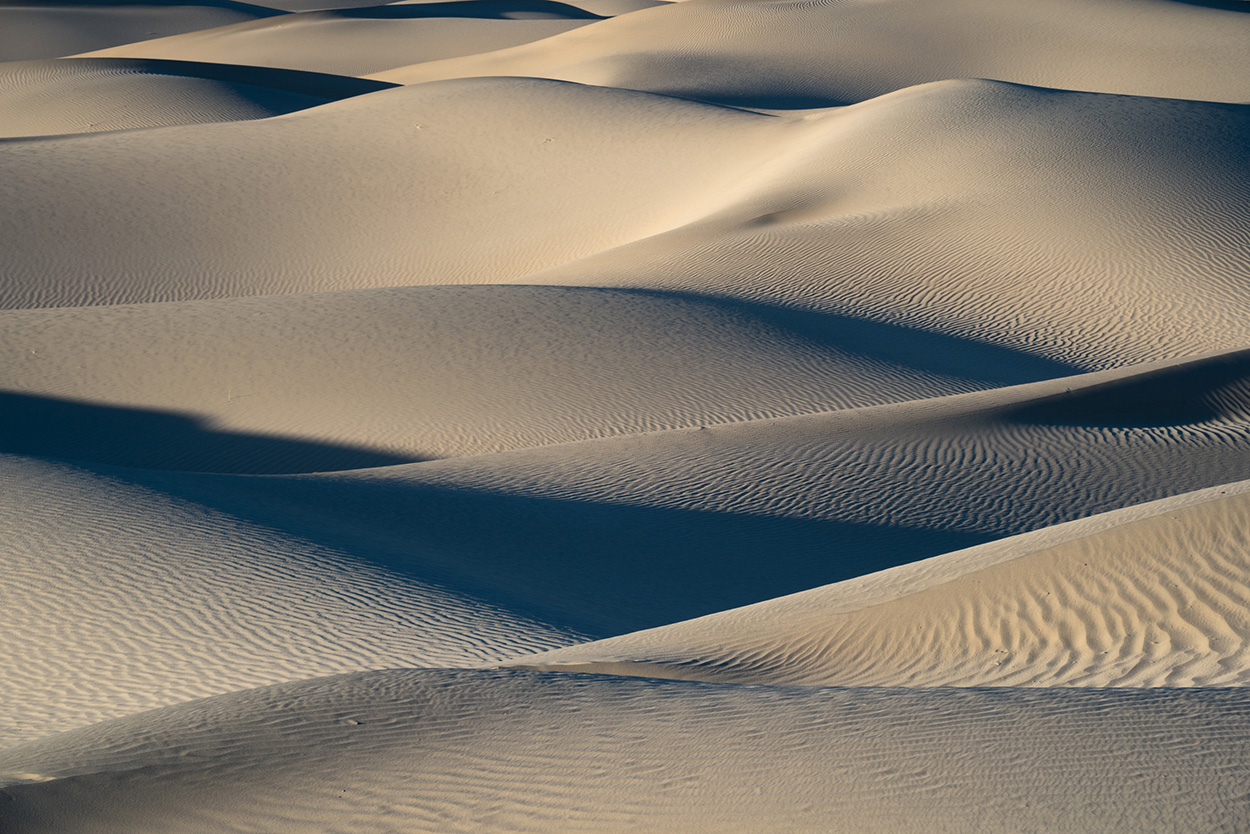
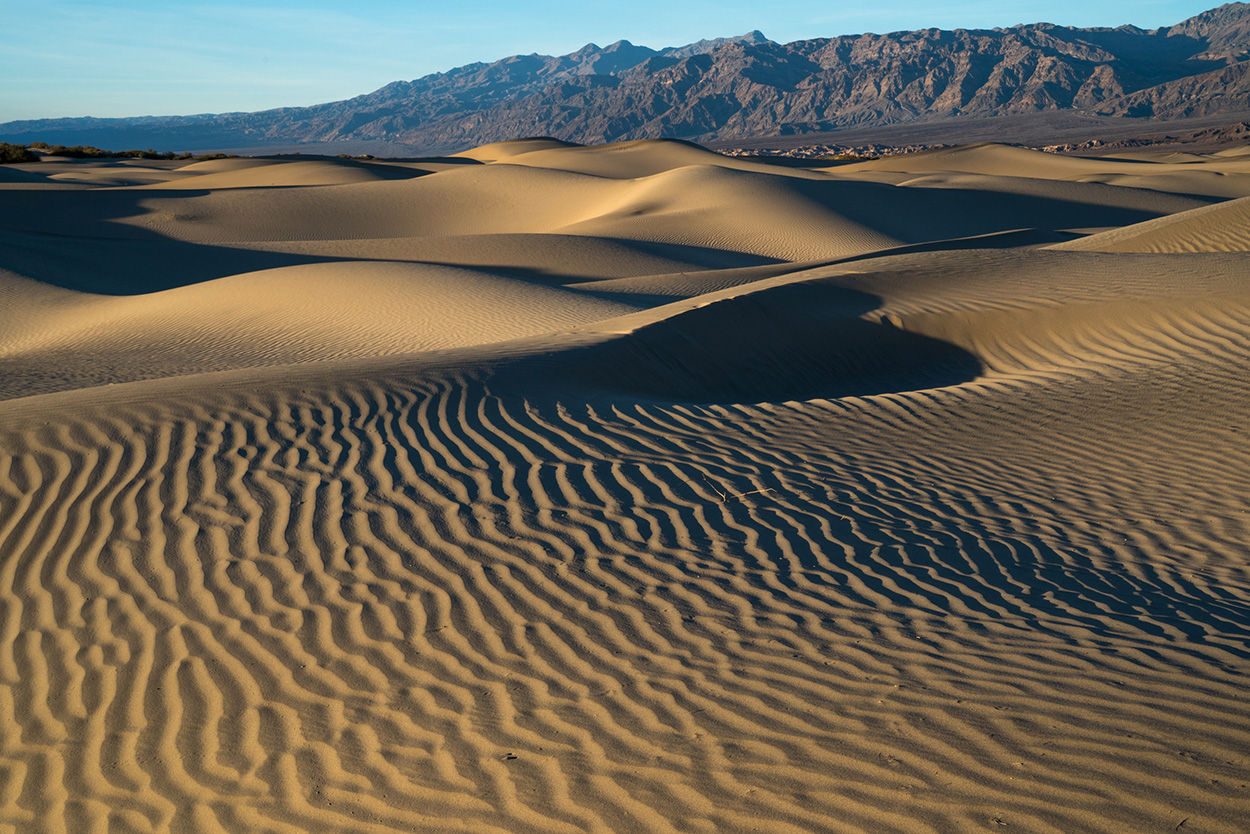
In the evening, I return once more for the warm light and capture various compositions—from expansive shots of the desert landscape with mountains glowing red in the background to detail images and dune patterns. With the all-in-one zoom, both are possible.
The Travel Zoom as a Versatile Companion
After two intense weeks in the U.S. Southwest, the 25–200mm F/2.8–5.6 Di III VXD G2 has proven to be a very well-balanced solution for me. The weight and compact size are unbeatable, as I often have to manage steep climbs with plenty of additional gear. Every gram less makes a noticeable difference.
The extended wide-angle range makes a tangible difference in landscape photography, while weight and size keep the setup pleasantly mobile. The fact that the aperture isn’t constant at F/2.8 hardly matters for my way of working, as I usually stop down anyway to achieve consistent sharpness throughout the image.
Next, I’d like to try out the lens’s semi-macro range. For that, I’ll head into the local forest. For me, the 25–200mm has long since become more than just a travel zoom—it’s an uncomplicated tool that proves itself day after day in a wide variety of photographic situations.

About the author: Agnes Anna Sadowski
Over the past ten years, Anna Sadowski has traveled to more than 55 countries, photographing some of the most remote regions in the world—from vast deserts and volcanic landscapes to the icy realms of Antarctica. At the same time, she loves photography close to home: special light moods and small details in local forests provide her with a place of calm and balance in a fast-paced everyday life. Her subjects range from quiet moments in nature and astrophotography to travel and portrait photography. For her, the camera is a medium for capturing places, situations, and encounters. In post-processing, she takes care to preserve the mood of each moment as authentically as possible. Her work has received multiple awards and has been widely published.
