
30 oct. 2026 / Alexander Otto
Photographing Greenland: Among Icebergs, Whales and Vast Fjords
A photographic journey through East Greenland with the TAMRON 50-400mm F4.5-6.3
The ice being slowly pushed aside beneath the aluminum bow of our boat sounds like popcorn – an almost surreal noise. Meanwhile, the Greenlandic sun shines down on us from a steel-blue sky. I raise my telephoto lens and look through the viewfinder at a fantastically shaped iceberg just a few hundred meters away. Behind it stretches a vast panorama of rugged mountains rising up to 2,500 meters.
I press the shutter, look at my display, check my histogram – and slowly the corners of my mouth turn upward. I did it. In that moment, another lifelong dream comes true: photographing Greenland. I have been leading photography trips to the far north for years. But it is above all the remote regions that fascinate me and make my photographer's heart beat faster.
Photographing Greenland: Why East Greenland Has Fascinated Me for 15 Years
The journey to this moment began long before our arrival. Greenland has fascinated me for around 15 years. Back then, I first discovered the region around Tasiilaq on Google Earth Pro and became completely immersed in the landscape along the east coast, around Ammassalik Island and the surrounding fjords. Over the years, I read books about Greenland and followed photographers who had already been fortunate enough to travel there. Naturally, this only made me more eager to experience this landscape for myself.
The majestic mountains, icebergs and fjords, Inuit culture, and life under Arctic conditions make East Greenland a truly unique destination for photography. In summer, stable high-pressure systems can provide clear light – while at the same time, the weather in this remote region remains a factor that requires constant adaptation.
Photographing from a Boat: Flexibility Instead of Zooming with Your Feet
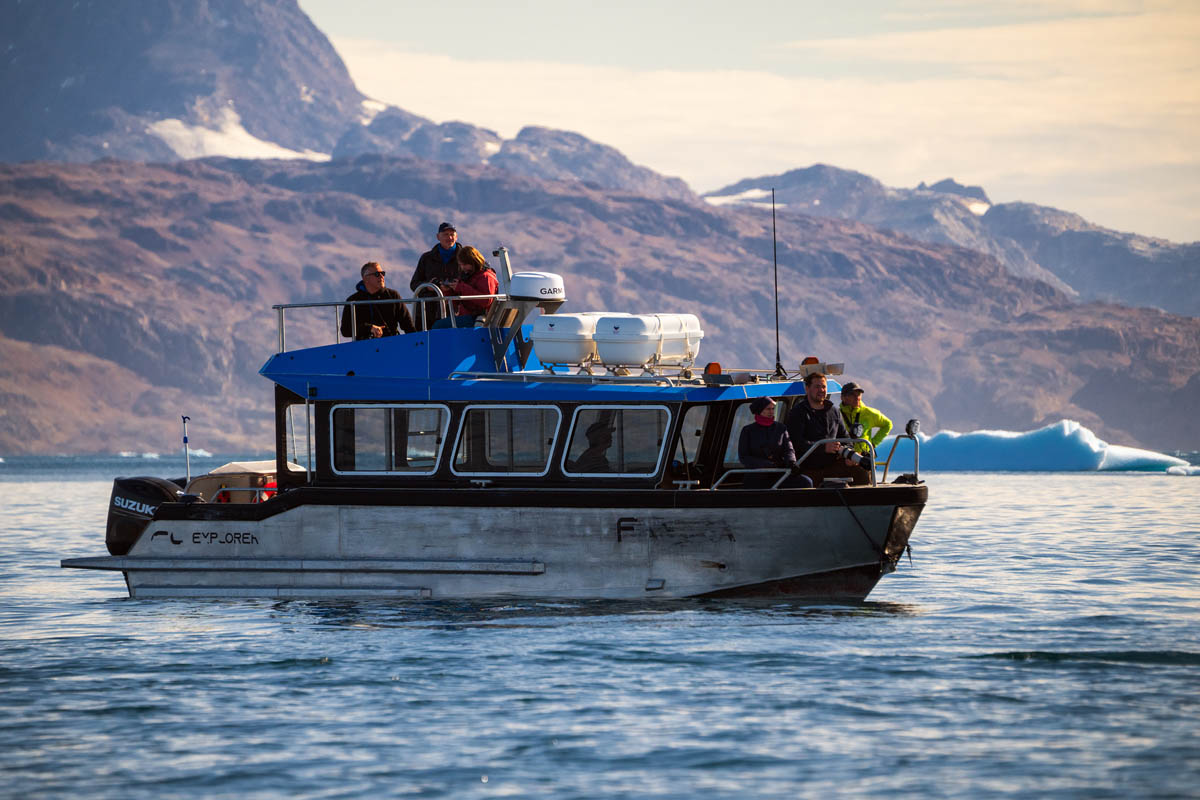
But how do I get from one fjord to another without roads? It was no coincidence that I advertised my photography trip with the words “Where the roads end.” In summer, people traveling through East Greenland primarily get around by boat or on foot. From a boat, you are naturally much more limited in your choice of position than you are on land.
That makes a lens covering a wide focal-length range particularly useful. This is exactly why I had my TAMRON 50-400mm F4.5-6.3 in my backpack – a lens I have really grown fond of over the past year and a half. Above all, for one simple reason: I rarely needed to change lenses and could do without a second camera body. With a 6 kg carry-on luggage limit on the flight to Kulusuk, this was a real advantage.
You can find more thoughts on compact photography gear in our travel photography tips.
Photo Tip 1 – Stay Flexible: When you cannot freely choose your position, having a wide focal-length range is particularly valuable. From the boat, I could switch between wide environmental shots, details in the ice and distant subjects without losing time changing lenses.
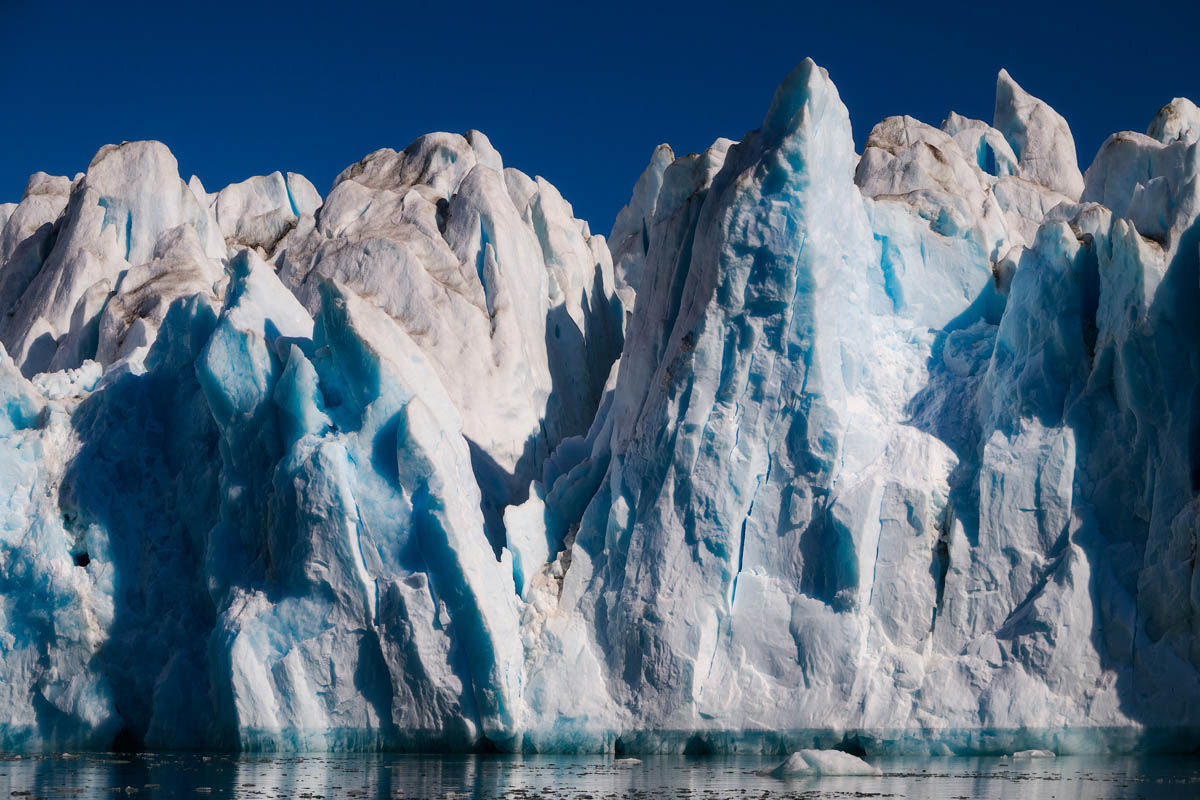
Photographing Icebergs and Glaciers: From the Big Picture to the Details
Compared with a classic 100-400mm lens, I have an additional 50 mm at the short end. In practice, this significantly expands the photographic possibilities. Especially from a boat, where I can only change my position to a limited extent, this allows me to cover a wide variety of compositions – from landscapes shown in context to abstract details in ice and rock.
We also explain why longer focal lengths can be exciting not only for wildlife and sports, but also for landscape photography, in our article What Is a Telephoto Lens?.
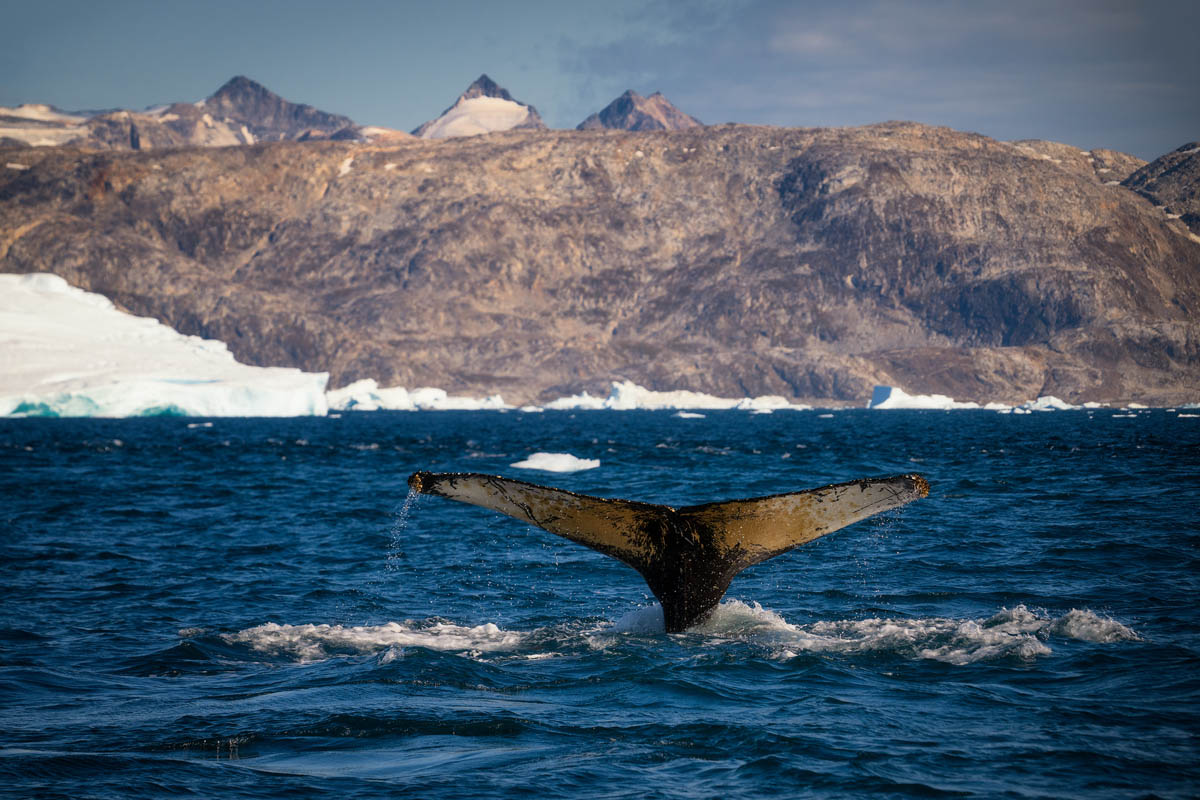
Photographing Whales: Reacting Between 50 and 400 mm
The advantage of the wide zoom range became particularly obvious when we spotted a whale in one of the fjords. Our skippers most often found humpback or minke whales. They have an impressively trained eye and can often spot from a great distance where an animal is about to surface. The hunting of certain whale species is regulated in Greenland and subject to quotas and licenses; for many people, it remains part of the local food supply.
From a photographic perspective, such encounters are challenging because you never know exactly where a whale will surface after a dive. One moment I might be shooting at 300 or 400 mm; the next, the animal may surface right next to our boat – and suddenly 50 mm becomes very welcome. It was precisely in these situations that I learned to appreciate the flexibility of the lens.
Photo Tip 2 – Don't Stay at 400 mm: With unpredictable subjects, it is worth leaving some space around the subject and zooming in when necessary. If a whale surfaces closer to the boat than expected, 50 mm allows you to react quickly and show the animal together with its surroundings.
You can find more information on autofocus, focal length and respectful wildlife photography in our Wildlife Photography: Dealing with the Unpredictable.
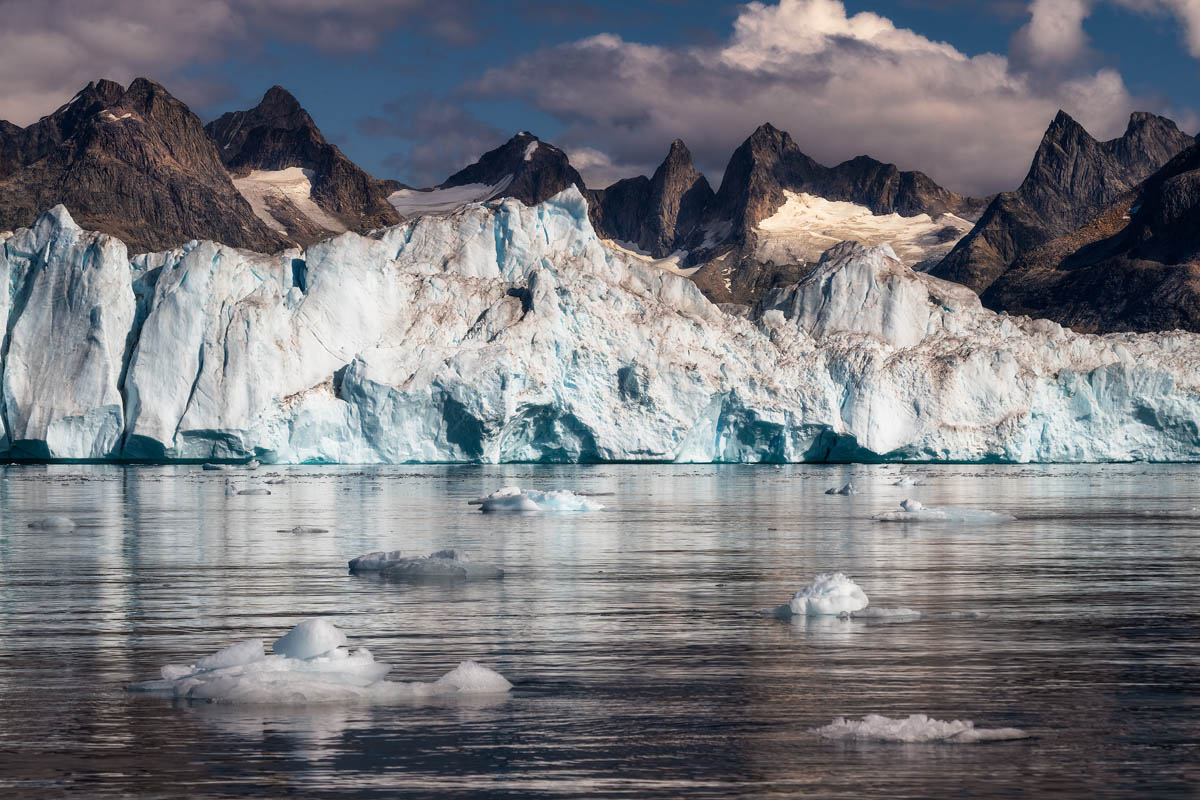
Telephoto Landscape Photography: Deliberately Compressing Layers
At longer focal lengths, the ability to visually bring landscape elements closely together is at least as important as being able to react quickly to wildlife. A great example presented itself during a boat trip on Sermilik Fjord. There, we photographed Mount Niialingaq behind an iceberg several hundred meters across that had broken away from a glacier and drifted southward.
By coordinating with our skipper, we were able to position the boat so that the iceberg and mountain lined up perfectly in the frame. The iceberg was only a few hundred meters away, while the mountain in the background was already several kilometers distant. From our greater shooting distance, the two layers appeared visually compressed; the long focal length allowed me to capture this relationship with a tight composition.
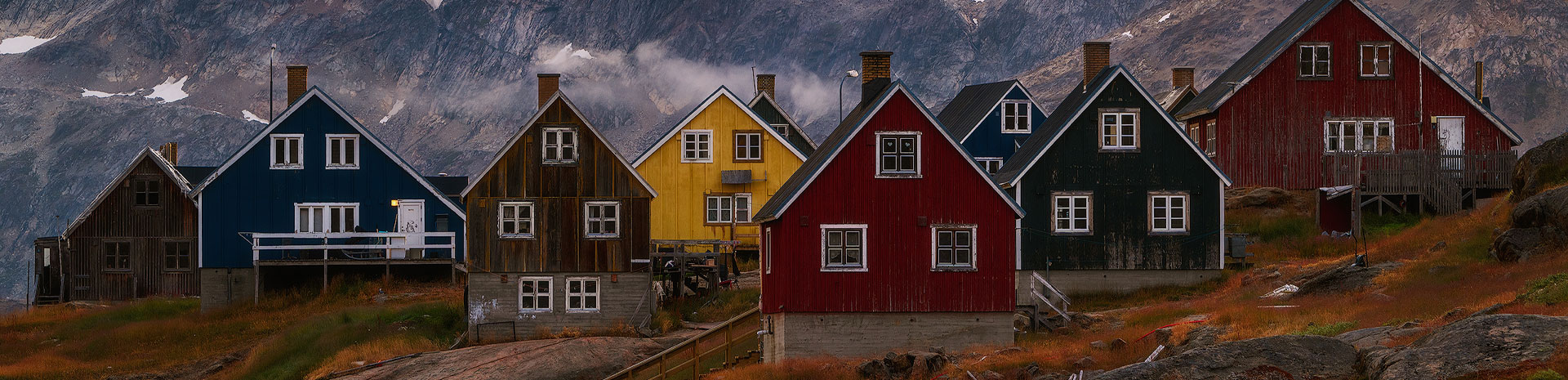
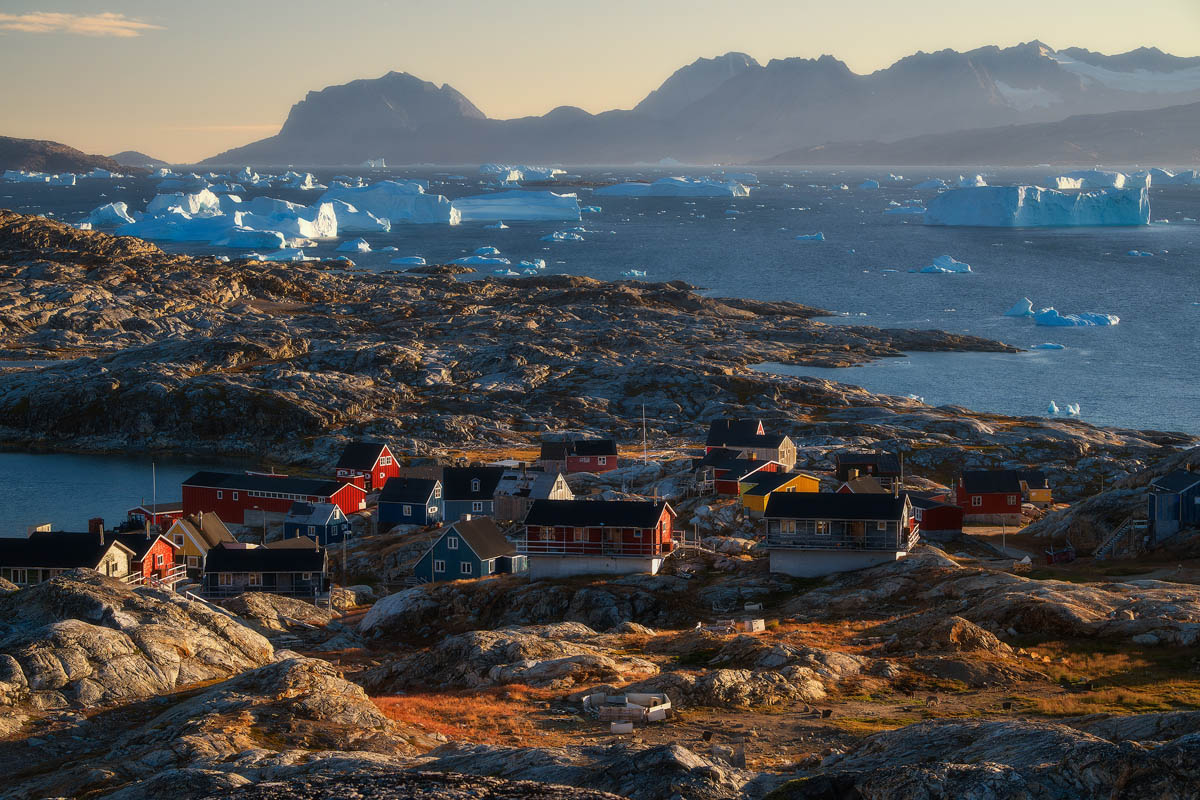
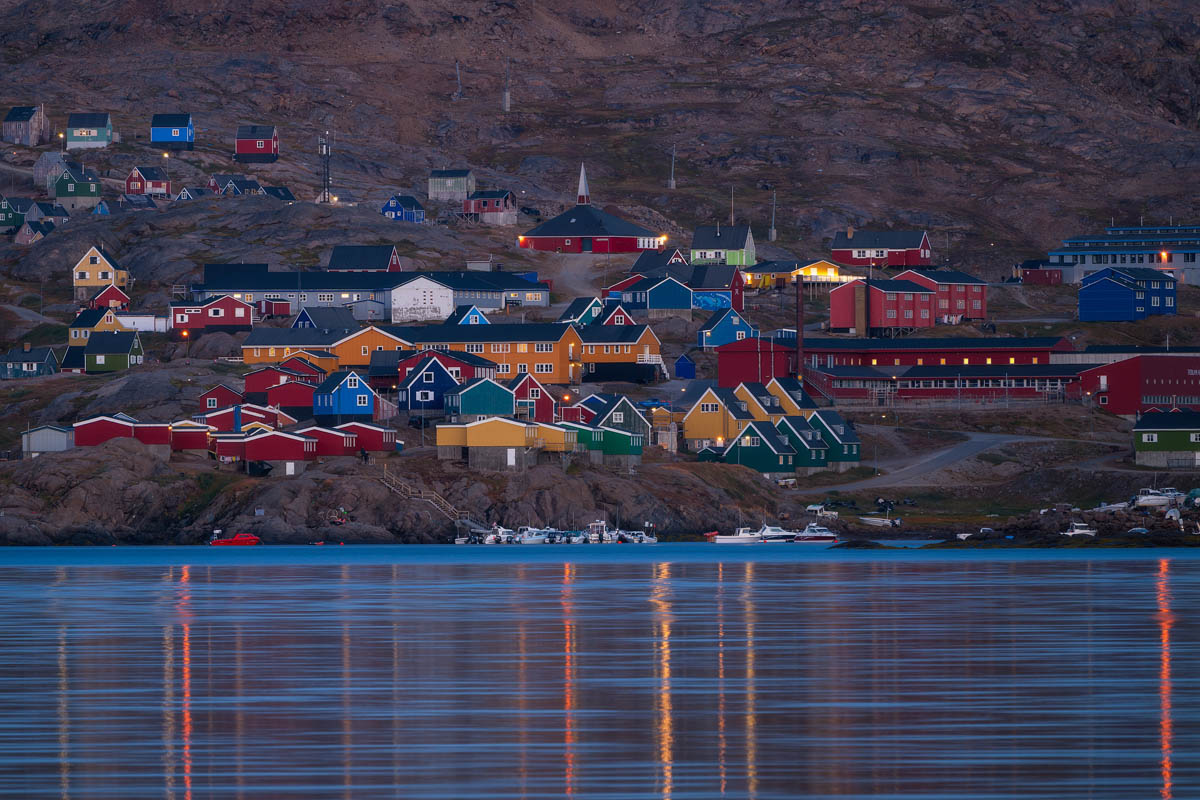
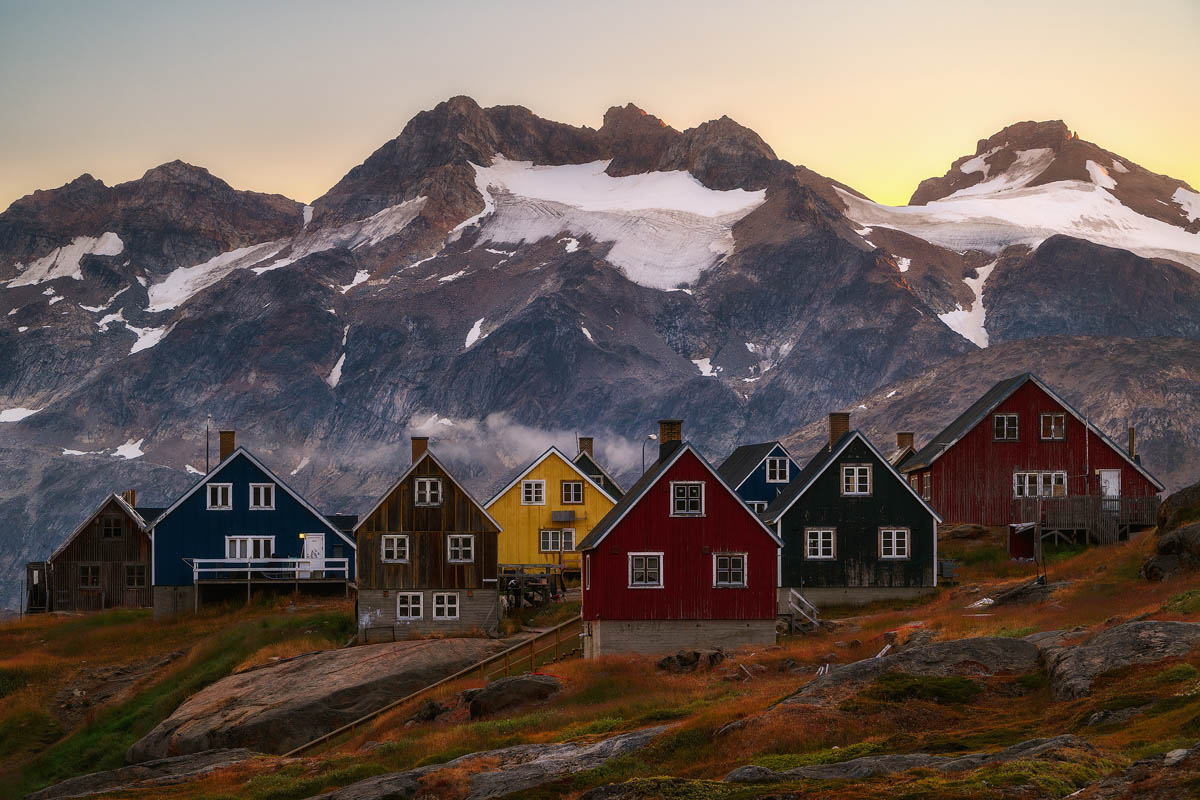
I used this type of composition in Tasiilaq as well as during our excursion to Tiniteqilaaq. Focal lengths around 100 mm and above were often exactly the right choice for relating houses, mountains, fjords and icebergs to one another. You can learn more about the interplay of shooting position, angle of view and perspective in the TAMRON guide Understanding and using perspective creatively.
Photo Tip 3 – Arrange the Layers Before You Zoom: The compressed visual effect is primarily created by the shooting position and the great distances between the different layers of the scene. First, look for a position where the foreground and background work well together. Then use the long focal length to select the right composition.
Photo Tip 4 – Use a Polarizing Filter Deliberately: A polarizing filter can reduce reflections on water and ice and make the sky appear more saturated. Check the effect directly through the viewfinder and rotate the filter only as far as necessary to maintain a natural-looking light and atmosphere.
You can find more ideas on light, planning and image composition in our Three Common Mistakes in Landscape Photography – and How to Avoid Them.
Photographing Sled Dogs: Getting Close with Respect
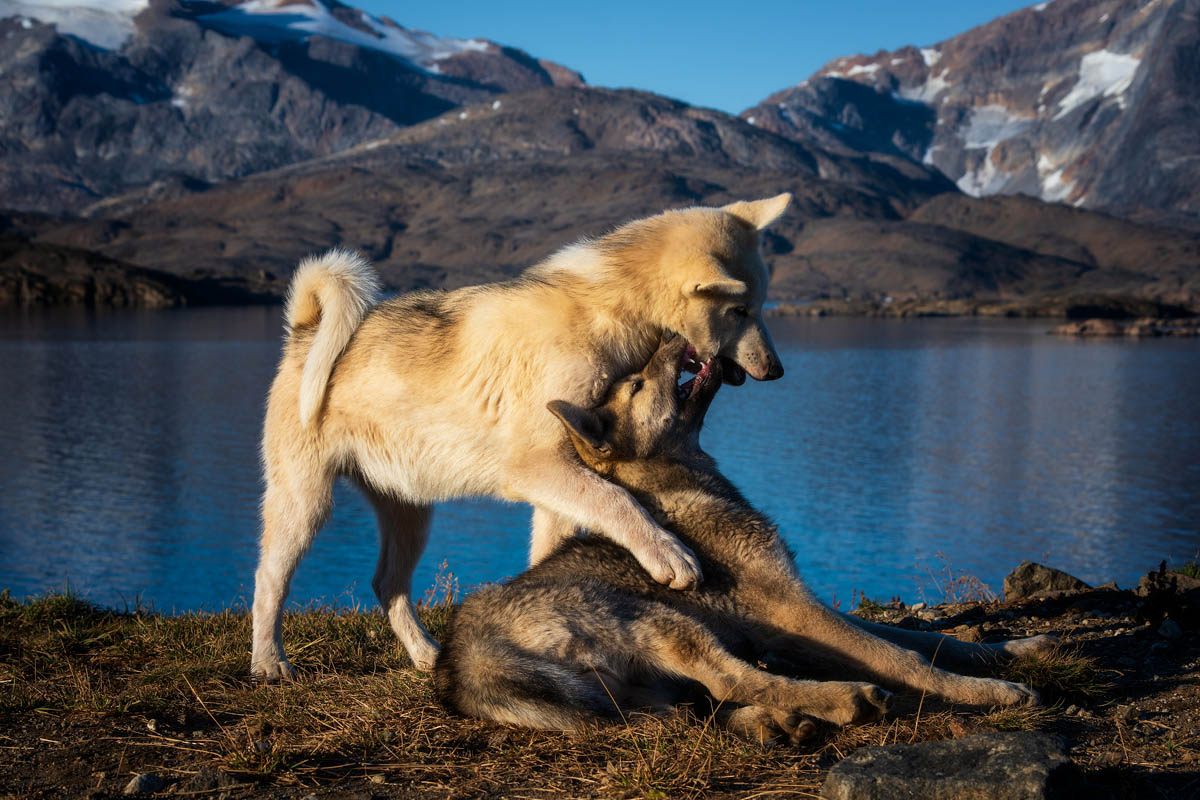
The lens is naturally also well suited to portraits of Greenlandic sled dogs. They remain an important part of the local culture to this day. Especially in winter, when the fjords freeze over, dog sleds continue to be used as a means of transportation in remote regions. In summer, many adult dogs live outside the settlements in designated areas. They are not pets in the Central European sense, but working animals.
When photographing the dogs, you sometimes have to deal with your own sense of compassion. In the evening, on the way to a sunset shoot, you pass the dog yards outside the settlements. Hearing the animals howl there in the twilight can certainly take some getting used to from a Central European perspective. For me, this impression is also part of a journey through East Greenland.
Why I Can't Let Go of East Greenland
Perhaps it is precisely the combination of magnificent landscapes, completely different living conditions, encounters with people and animals, and the knowledge that something entirely new may be waiting just around the next bend in the fjord that makes this place so special to me.
I am already looking forward to returning to East Greenland in late summer. There are still so many photographic ideas waiting to be brought to life that I hardly know where to begin.
EXIF: Nikon Z8 | TAMRON 50-400mm F4.5-6.3 | 125 mm | 1/320 s | F10 | ISO 80
EXIF: Nikon Z8 | TAMRON 50-400mm F4.5-6.3 | 232 mm | 1/400 s | F9 | ISO 180
EXIF: Nikon Z8 | TAMRON 50-400mm F4.5-6.3 | 232 mm | 1/400 s | F9 | ISO 180
EXIF: Nikon Z8 | TAMRON 50-400mm F4.5-6.3 | 145 mm | 1/250 s | F14 | ISO 100
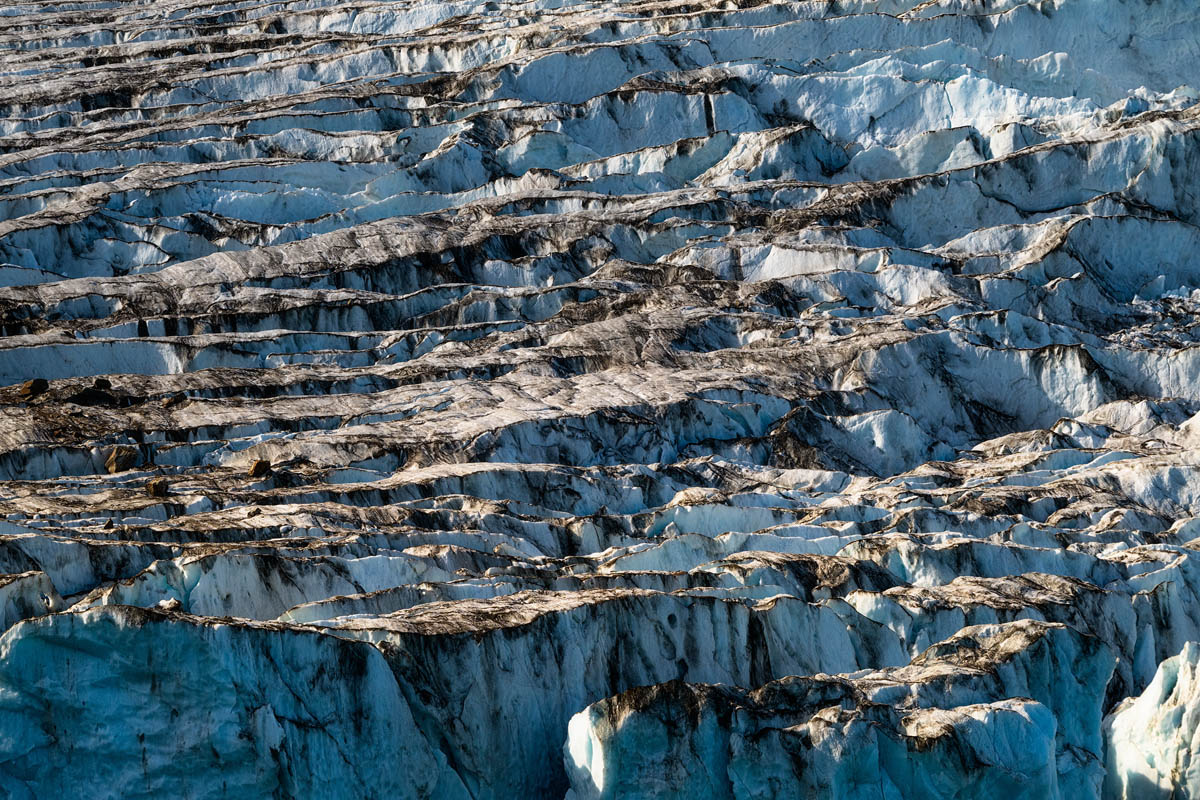
EXIF: Nikon Z8 | TAMRON 50-400mm F4.5-6.3 | 394 mm | 1/400 s | F13 | ISO 400
EXIF: Nikon Z8 | TAMRON 50-400mm F4.5-6.3 | 61 mm | 1/400 s | F9 | ISO 80
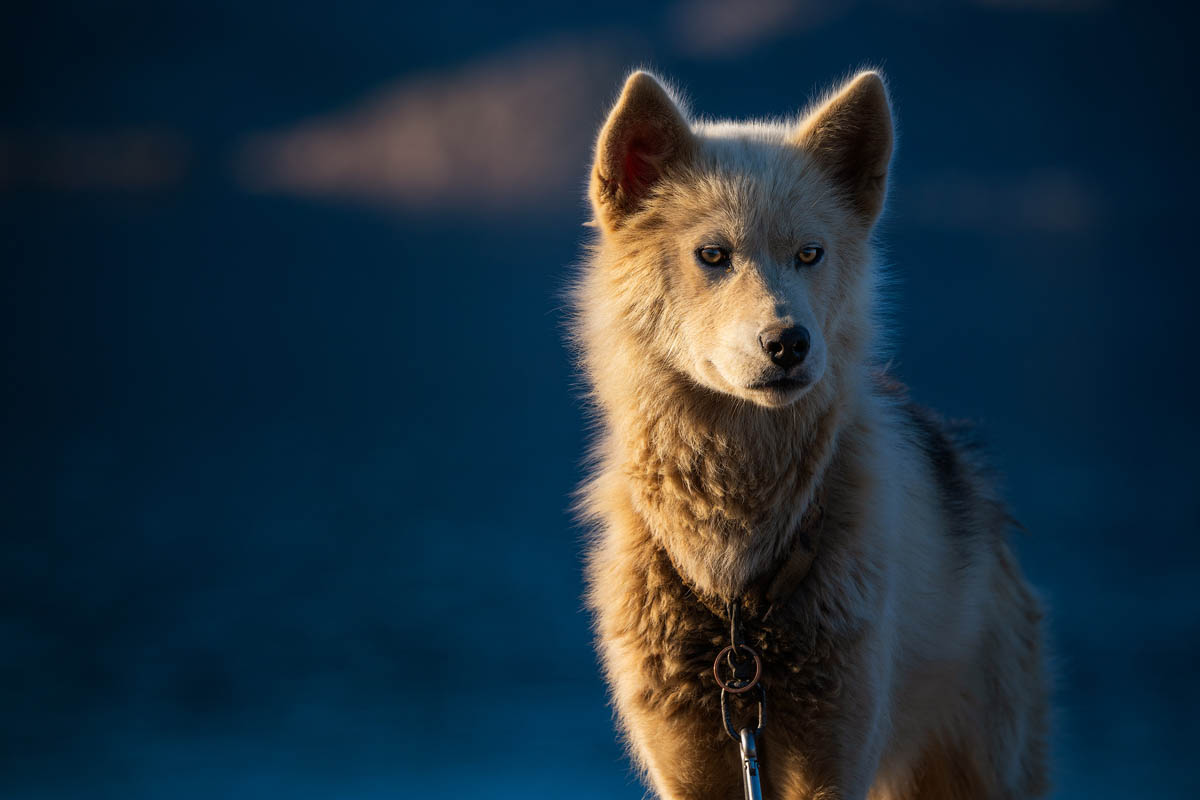
EXIF: Nikon Z8 | TAMRON 50-400mm F4.5-6.3 | 368 mm | 1/400 s | F9 | ISO 125
EXIF: Nikon Z8 | TAMRON 50-400mm F4.5-6.3 | 400 mm | 1,3 s | F8 | ISO 80
EXIF: Nikon Z8 | TAMRON 50-400mm F4.5-6.3 | 148 mm | 1/6 s | F11 | ISO 64
EXIF: Nikon Z8 | TAMRON 50-400mm F4.5-6.3 | 85 mm | 1/160 s | F10 | ISO 400
A propos de l'auteur : Alexander Otto
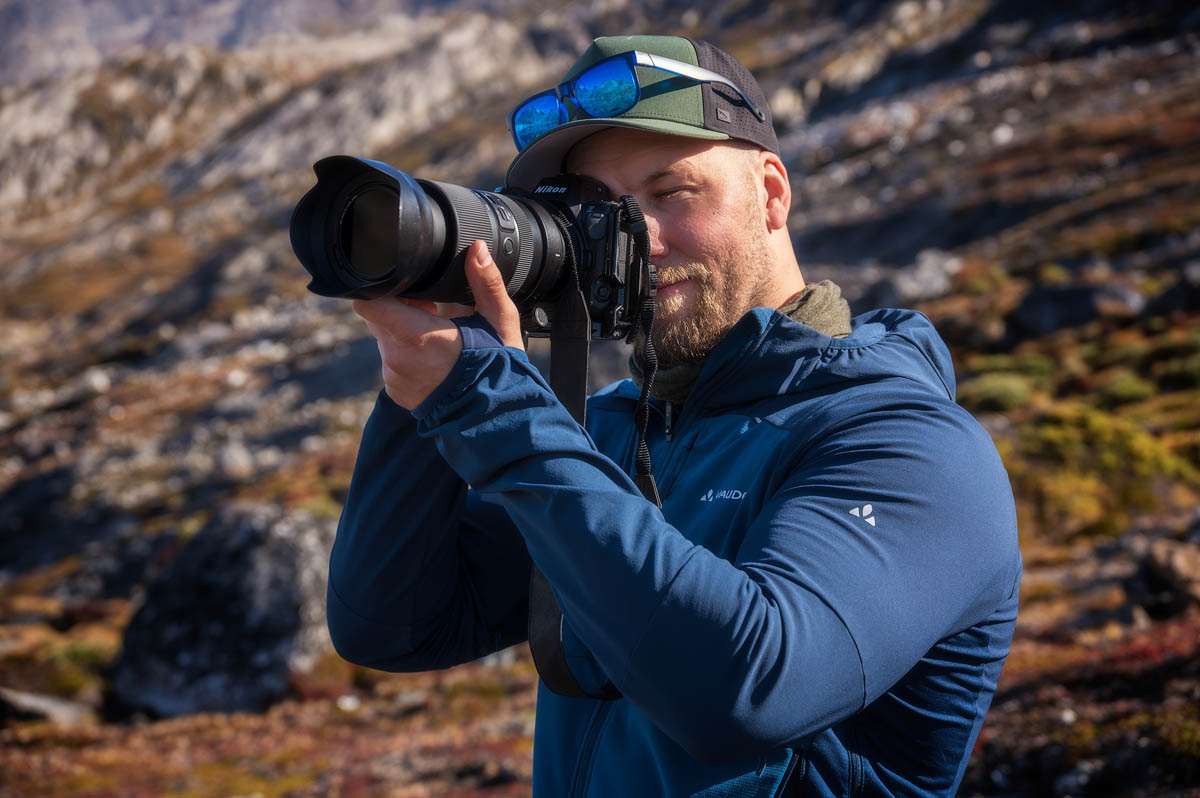
Alexander Otto is a landscape photographer, author and photography guide. His work focuses on extraordinary landscapes and the interplay of light, weather and carefully considered image composition. He shares his experience through books, lectures, workshops and photography trips.
Produits TAMRON mentionnés dans cet article
50-400mm F/4.5-6.3 Di III VC VXD
Modèle A067

%20--%3e%3csvg%20xmlns:dc='http://purl.org/dc/elements/1.1/'%20xmlns:cc='http://creativecommons.org/ns%23'%20xmlns:rdf='http://www.w3.org/1999/02/22-rdf-syntax-ns%23'%20xmlns:svg='http://www.w3.org/2000/svg'%20xmlns='http://www.w3.org/2000/svg'%20xmlns:sodipodi='http://sodipodi.sourceforge.net/DTD/sodipodi-0.dtd'%20xmlns:inkscape='http://www.inkscape.org/namespaces/inkscape'%20version='1.1'%20id='Layer_1'%20x='0px'%20y='0px'%20width='1000.046'%20height='323.65302'%20viewBox='0%200%201000.046%20323.653'%20enable-background='new%200%200%20258.381%20161.154'%20xml:space='preserve'%20inkscape:version='0.91%20r13725'%20sodipodi:docname='Visa_2006.svg'%3e%3cmetadata%20id='metadata23'%3e%3crdf:RDF%3e%3ccc:Work%20rdf:about=''%3e%3cdc:format%3eimage/svg+xml%3c/dc:format%3e%3cdc:type%20rdf:resource='http://purl.org/dc/dcmitype/StillImage'%20/%3e%3cdc:title%3e%3c/dc:title%3e%3c/cc:Work%3e%3c/rdf:RDF%3e%3c/metadata%3e%3cdefs%20id='defs21'%3e%3c/defs%3e%3csodipodi:namedview%20pagecolor='%23ffffff'%20bordercolor='%23666666'%20borderopacity='1'%20objecttolerance='10'%20gridtolerance='10'%20guidetolerance='10'%20inkscape:pageopacity='0'%20inkscape:pageshadow='2'%20inkscape:window-width='1366'%20inkscape:window-height='705'%20id='namedview19'%20showgrid='false'%20inkscape:zoom='0.35355339'%20inkscape:cx='34.690897'%20inkscape:cy='131.15483'%20inkscape:window-x='-8'%20inkscape:window-y='-8'%20inkscape:window-maximized='1'%20inkscape:current-layer='Layer_1'%20/%3e%3cg%20id='g4158'%20transform='matrix(4.4299631,0,0,4.4299631,-81.165783,-105.04783)'%3e%3cpolygon%20points='116.145,95.719%2097.858,95.719%20109.296,24.995%20127.582,24.995%20'%20id='polygon9'%20style='fill:%2300579f'%20/%3e%3cpath%20d='m%20182.437,26.724%20c%20-3.607,-1.431%20-9.328,-3.011%20-16.402,-3.011%20-18.059,0%20-30.776,9.63%20-30.854,23.398%20-0.15,10.158%209.105,15.8%2016.027,19.187%207.075,3.461%209.48,5.72%209.48,8.805%20-0.072,4.738%20-5.717,6.922%20-10.982,6.922%20-7.301,0%20-11.213,-1.126%20-17.158,-3.762%20l%20-2.408,-1.13%20-2.559,15.876%20c%204.289,1.954%2012.191,3.688%2020.395,3.764%2019.188,0%2031.68,-9.481%2031.828,-24.153%200.073,-8.051%20-4.814,-14.22%20-15.35,-19.261%20-6.396,-3.236%20-10.313,-5.418%20-10.313,-8.729%200.075,-3.01%203.313,-6.093%2010.533,-6.093%205.945,-0.151%2010.313,1.278%2013.622,2.708%20l%201.654,0.751%202.487,-15.272%200,0%20z'%20id='path11'%20inkscape:connector-curvature='0'%20style='fill:%2300579f'%20/%3e%3cpath%20d='m%20206.742,70.664%20c%201.506,-4.063%207.301,-19.788%207.301,-19.788%20-0.076,0.151%201.503,-4.138%202.406,-6.771%20l%201.278,6.094%20c%200,0%203.463,16.929%204.215,20.465%20-2.858,0%20-11.588,0%20-15.2,0%20l%200,0%20z%20m%2022.573,-45.669%20-14.145,0%20c%20-4.362,0%20-7.676,1.278%20-9.558,5.868%20l%20-27.163,64.855%2019.188,0%20c%200,0%203.159,-8.729%203.838,-10.609%202.105,0%2020.771,0%2023.479,0%200.525,2.483%202.182,10.609%202.182,10.609%20l%2016.932,0%20-14.753,-70.723%200,0%20z'%20id='path13'%20inkscape:connector-curvature='0'%20style='fill:%2300579f'%20/%3e%3cpath%20d='M%2082.584,24.995%2064.675,73.222%2062.718,63.441%20C%2059.407,52.155%2049.023,39.893%2037.435,33.796%20l%2016.404,61.848%2019.338,0%2028.744,-70.649%20-19.337,0%200,0%20z'%20id='path15'%20inkscape:connector-curvature='0'%20style='fill:%2300579f'%20/%3e%3cpath%20d='m%2048.045,24.995%20-29.422,0%20-0.301,1.429%20c%2022.951,5.869%2038.151,20.016%2044.396,37.02%20L%2056.322,30.94%20c%20-1.053,-4.517%20-4.289,-5.796%20-8.277,-5.945%20l%200,0%20z'%20id='path17'%20inkscape:connector-curvature='0'%20style='fill:%23faa61a'%20/%3e%3c/g%3e%3c/svg%3e)
%20--%3e%3csvg%20version='1.1'%20id='svg3409'%20inkscape:version='0.91%20r13725'%20sodipodi:docname='MasterCard%202016.svg'%20xmlns:cc='http://creativecommons.org/ns%23'%20xmlns:dc='http://purl.org/dc/elements/1.1/'%20xmlns:inkscape='http://www.inkscape.org/namespaces/inkscape'%20xmlns:rdf='http://www.w3.org/1999/02/22-rdf-syntax-ns%23'%20xmlns:sodipodi='http://sodipodi.sourceforge.net/DTD/sodipodi-0.dtd'%20xmlns:svg='http://www.w3.org/2000/svg'%20xmlns='http://www.w3.org/2000/svg'%20xmlns:xlink='http://www.w3.org/1999/xlink'%20x='0px'%20y='0px'%20width='999.2px'%20height='776px'%20viewBox='0%200%20999.2%20776'%20enable-background='new%200%200%20999.2%20776'%20xml:space='preserve'%3e%3cpath%20id='XMLID_1775_'%20inkscape:connector-curvature='0'%20d='M181.1,774.3v-51.5c0-19.7-12-32.6-32.6-32.6%20c-10.3,0-21.5,3.4-29.2,14.6c-6-9.4-14.6-14.6-27.5-14.6c-8.6,0-17.2,2.6-24,12v-10.3h-18v82.4h18v-45.5c0-14.6,7.7-21.5,19.7-21.5%20s18,7.7,18,21.5v45.5h18v-45.5c0-14.6,8.6-21.5,19.7-21.5c12,0,18,7.7,18,21.5v45.5H181.1z%20M448.1,691.9h-29.2V667h-18v24.9h-16.3%20v16.3h16.3v37.8c0,18.9,7.7,30,28.3,30c7.7,0,16.3-2.6,22.3-6l-5.2-15.5c-5.2,3.4-11.2,4.3-15.5,4.3c-8.6,0-12-5.2-12-13.7v-36.9%20h29.2V691.9z%20M600.9,690.1c-10.3,0-17.2,5.2-21.5,12v-10.3h-18v82.4h18v-46.4c0-13.7,6-21.5,17.2-21.5c3.4,0,7.7,0.9,11.2,1.7%20l5.2-17.2C609.4,690.1,604.3,690.1,600.9,690.1L600.9,690.1z%20M370,698.7c-8.6-6-20.6-8.6-33.5-8.6c-20.6,0-34.3,10.3-34.3,26.6%20c0,13.7,10.3,21.5,28.3,24l8.6,0.9c9.4,1.7,14.6,4.3,14.6,8.6c0,6-6.9,10.3-18.9,10.3c-12,0-21.5-4.3-27.5-8.6l-8.6,13.7%20c9.4,6.9,22.3,10.3,35.2,10.3c24,0,37.8-11.2,37.8-26.6c0-14.6-11.2-22.3-28.3-24.9l-8.6-0.9c-7.7-0.9-13.7-2.6-13.7-7.7%20c0-6,6-9.4,15.5-9.4c10.3,0,20.6,4.3,25.8,6.9L370,698.7L370,698.7z%20M848.9,690.1c-10.3,0-17.2,5.2-21.5,12v-10.3h-18v82.4h18v-46.4%20c0-13.7,6-21.5,17.2-21.5c3.4,0,7.7,0.9,11.2,1.7L861,691C857.5,690.1,852.4,690.1,848.9,690.1L848.9,690.1z%20M618.9,733.1%20c0,24.9,17.2,42.9,43.8,42.9c12,0,20.6-2.6,29.2-9.4l-8.6-14.6c-6.9,5.2-13.7,7.7-21.5,7.7c-14.6,0-24.9-10.3-24.9-26.6%20c0-15.5,10.3-25.8,24.9-26.6c7.7,0,14.6,2.6,21.5,7.7l8.6-14.6c-8.6-6.9-17.2-9.4-29.2-9.4C636.1,690.1,618.9,708.2,618.9,733.1%20L618.9,733.1L618.9,733.1z%20M785.4,733.1v-41.2h-18v10.3c-6-7.7-14.6-12-25.8-12c-23.2,0-41.2,18-41.2,42.9c0,24.9,18,42.9,41.2,42.9%20c12,0,20.6-4.3,25.8-12v10.3h18V733.1L785.4,733.1z%20M719.3,733.1c0-14.6,9.4-26.6,24.9-26.6c14.6,0,24.9,11.2,24.9,26.6%20c0,14.6-10.3,26.6-24.9,26.6C728.8,758.8,719.3,747.6,719.3,733.1L719.3,733.1z%20M503.9,690.1c-24,0-41.2,17.2-41.2,42.9%20c0,25.8,17.2,42.9,42.1,42.9c12,0,24-3.4,33.5-11.2l-8.6-12.9c-6.9,5.2-15.5,8.6-24,8.6c-11.2,0-22.3-5.2-24.9-19.7h60.9%20c0-2.6,0-4.3,0-6.9C542.5,707.3,527,690.1,503.9,690.1L503.9,690.1L503.9,690.1z%20M503.9,705.6c11.2,0,18.9,6.9,20.6,19.7h-42.9%20C483.3,714.2,491,705.6,503.9,705.6L503.9,705.6z%20M951.1,733.1v-73.8h-18v42.9c-6-7.7-14.6-12-25.8-12c-23.2,0-41.2,18-41.2,42.9%20c0,24.9,18,42.9,41.2,42.9c12,0,20.6-4.3,25.8-12v10.3h18V733.1L951.1,733.1z%20M885,733.1c0-14.6,9.4-26.6,24.9-26.6%20c14.6,0,24.9,11.2,24.9,26.6c0,14.6-10.3,26.6-24.9,26.6C894.4,758.8,885,747.6,885,733.1L885,733.1z%20M282.4,733.1v-41.2h-18v10.3%20c-6-7.7-14.6-12-25.8-12c-23.2,0-41.2,18-41.2,42.9c0,24.9,18,42.9,41.2,42.9c12,0,20.6-4.3,25.8-12v10.3h18V733.1L282.4,733.1z%20M215.5,733.1c0-14.6,9.4-26.6,24.9-26.6c14.6,0,24.9,11.2,24.9,26.6c0,14.6-10.3,26.6-24.9,26.6%20C224.9,758.8,215.5,747.6,215.5,733.1z'/%3e%3cg%3e%3crect%20id='rect19'%20x='364'%20y='66.1'%20fill='%23FF5A00'%20width='270.4'%20height='485.8'/%3e%3cpath%20id='XMLID_330_'%20inkscape:connector-curvature='0'%20fill='%23EB001B'%20d='M382,309c0-98.7,46.4-186.3,117.6-242.9%20C447.2,24.9,381.1,0,309,0C138.2,0,0,138.2,0,309s138.2,309,309,309c72.1,0,138.2-24.9,190.6-66.1C428.3,496.1,382,407.7,382,309z'%20/%3e%3cpath%20id='path22'%20inkscape:connector-curvature='0'%20fill='%23F79E1B'%20d='M999.2,309c0,170.8-138.2,309-309,309%20c-72.1,0-138.2-24.9-190.6-66.1c72.1-56.7,117.6-144.2,117.6-242.9S570.8,122.7,499.6,66.1C551.9,24.9,618,0,690.1,0%20C861,0,999.2,139.1,999.2,309z'/%3e%3c/g%3e%3c/svg%3e)

