
2026-10-20
The Magic of Autumn
How to Capture Its Colors, Mood, and Landscapes
When autumn arrives, the landscape seems to change almost every day. The light becomes softer, the forests burst into color, morning dew settles on the meadows, and even familiar paths can suddenly look completely different.
For photographers, this means an abundance of opportunities. At the same time, capturing the atmosphere you experience in the field and translating it into a compelling photograph isn’t always easy.
Autumn photography is about much more than colorful leaves. It’s about color, light, landscapes, small details, and the unique atmosphere of the season. In this guide, I’ll show you how to capture autumn in a variety of creative and atmospheric ways – from sweeping landscapes to individual leaves and autumn portraits.
Discover the Diversity of Autumn
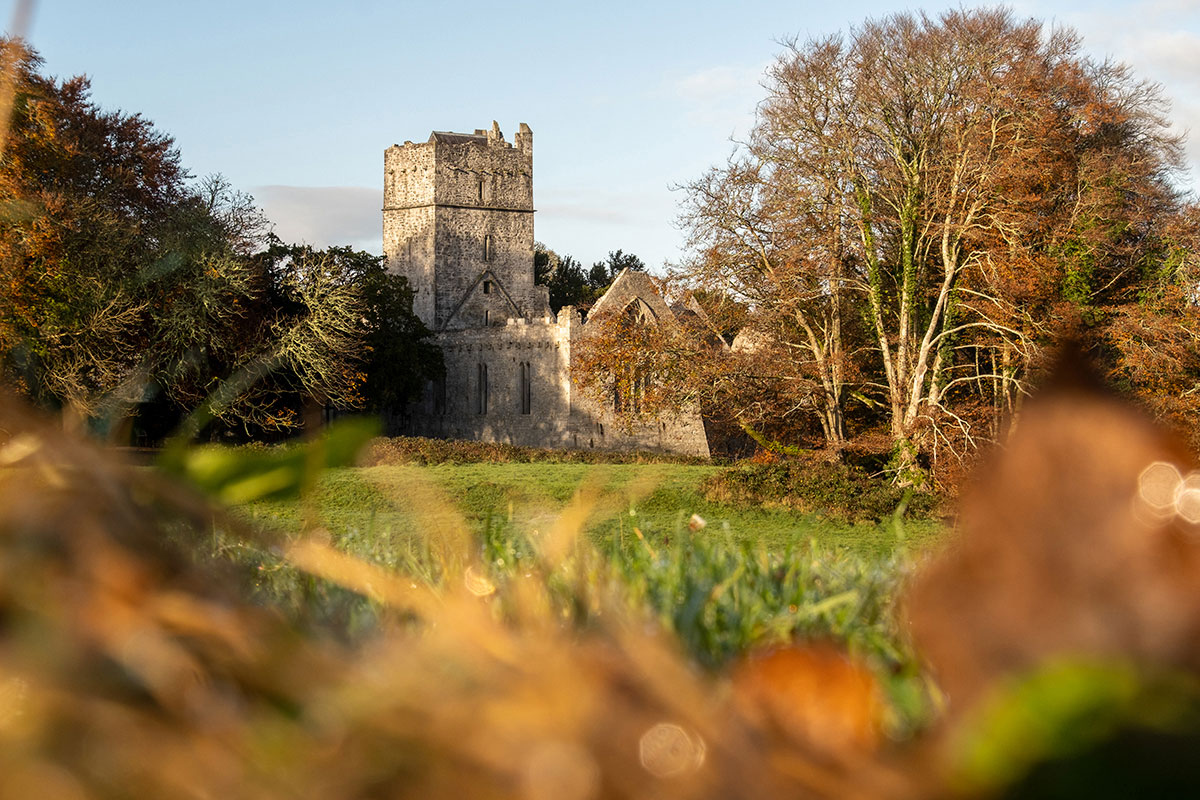
Before you start thinking about camera settings and lenses, take some time to really observe your surroundings. Autumn can offer an incredible variety of subjects, and sometimes simply changing your viewpoint can completely transform an image.
A colorful avenue of trees, a solitary tree standing in a meadow, wet leaves covering the ground, or a reflection on a lake – all of these scenes can tell a story about autumn.
Photographing Expansive Autumn Landscapes
When autumn colors stretch across an entire landscape, you naturally want your photographs to convey that sense of space. A wide-angle lens with a focal length of around 35 mm or less is ideal for this type of scene.
An aperture between f/8 and f/11 keeps a large portion of the image sharp, from the foreground all the way to the background. This gives your photographs a greater sense of depth and makes the landscape feel more expansive.
Don’t forget to pay attention to the sky, too. The contrast between a clear blue sky and the warm colors of autumn can make an image especially striking. On sunny mornings, the air is often crisp and clear, while the light can be wonderfully soft.
Sometimes, all it takes is a few extra steps to find a more interesting foreground. A path, a meadow, or a few fallen leaves can help lead the viewer’s eye into the scene.
Small Details, Big Impact
You don’t always need to photograph an entire landscape to create a compelling autumn image. Sometimes, the best approach is simply to move closer.
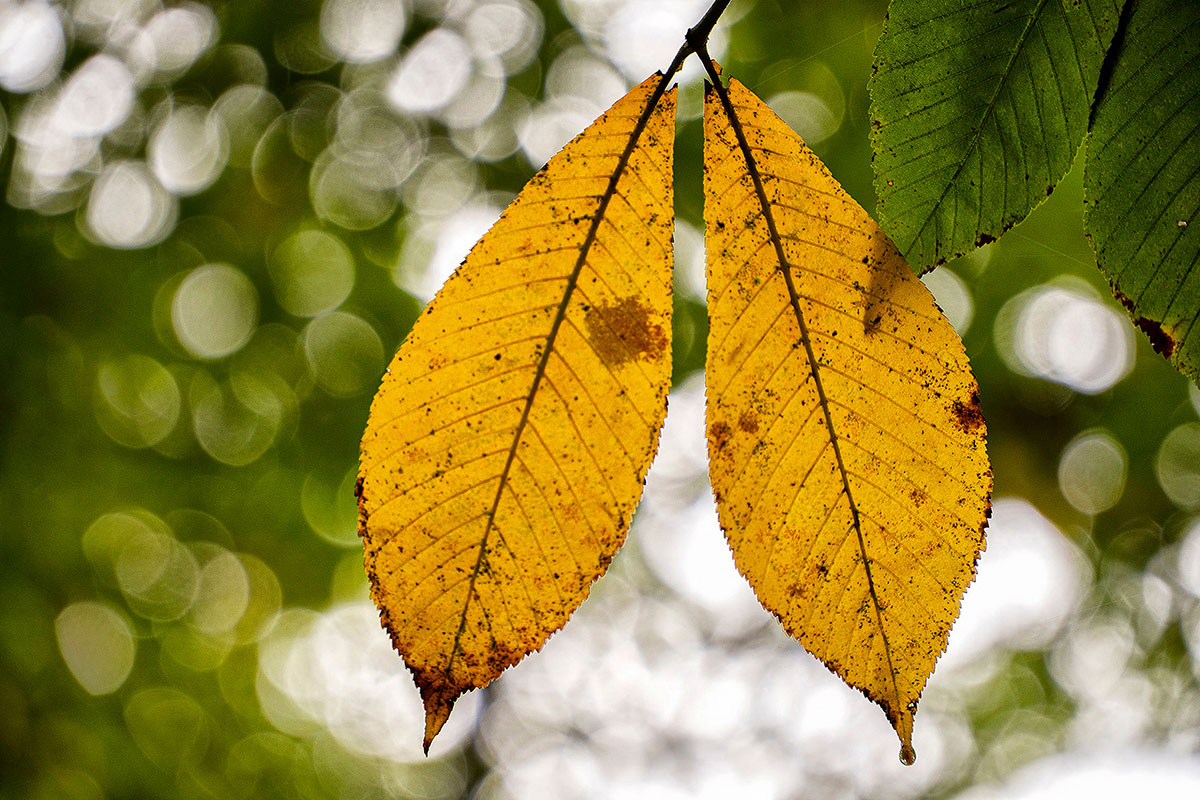
A single leaf can be a fascinating subject thanks to its color, texture, and shape. If your lens has a short minimum focusing distance, or if you have a macro lens available, you can really bring those details to life.
An open aperture between f/2.8 and f/4 creates a softer background, helping the subject stand out clearly from its surroundings.
This is also a great opportunity to experiment with different backgrounds. A clean, uncluttered background keeps the focus on the leaf, while additional autumn colors can give the image a more vibrant and dynamic feel.
There’s Plenty to Discover on the Ground
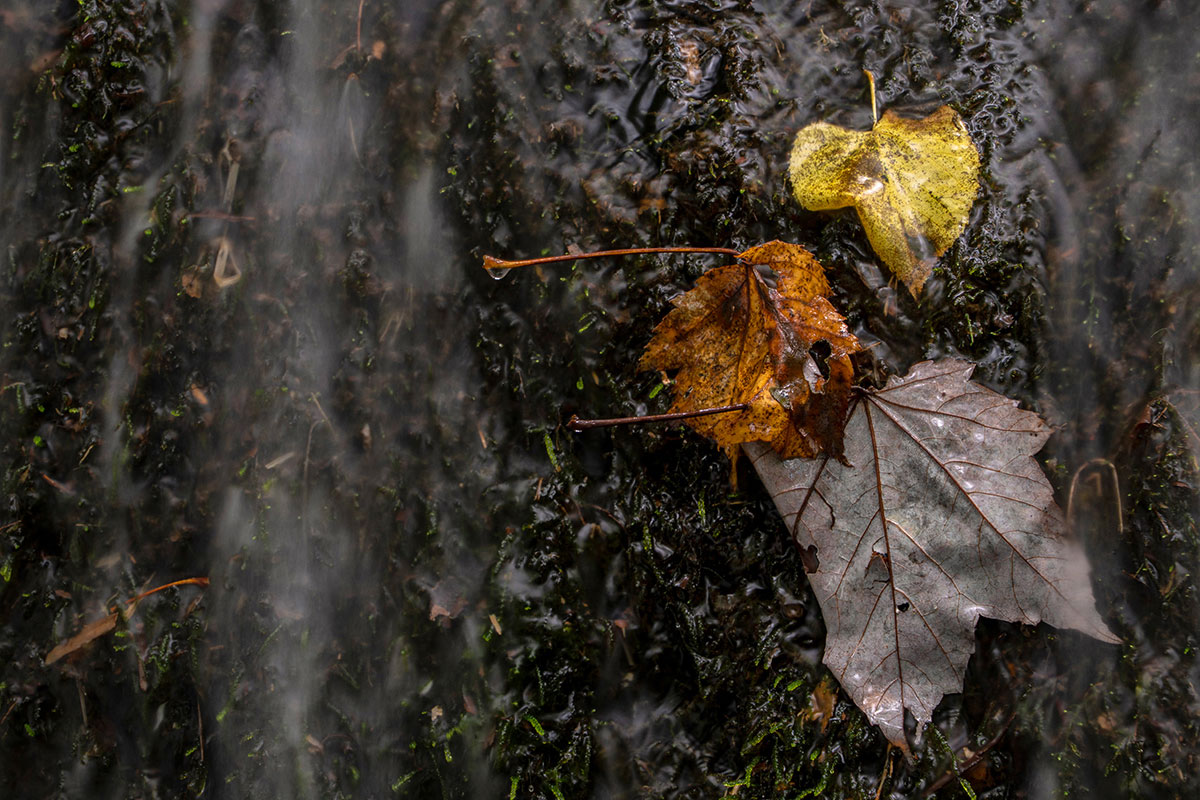
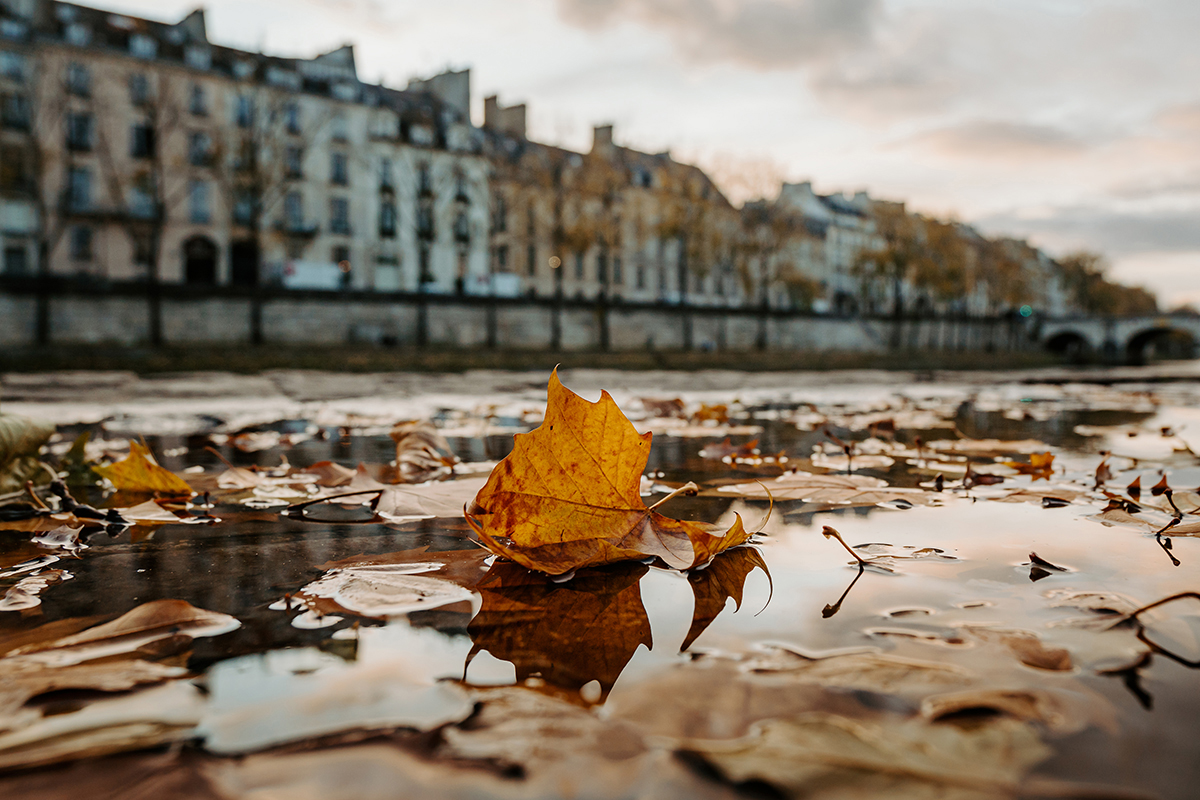
Autumn photography doesn’t always happen at eye level. Once the leaves begin to fall, the ground itself becomes a fascinating source of subjects.
With a wide-angle or standard lens, for example, you can capture larger areas and highlight the different colors, shapes, and patterns created by fallen leaves.
An aperture between f/5 and f/8 is a good starting point. It keeps the leaves sufficiently sharp while bringing out their textures and the contrast between the leaves and the ground.
Take a moment to look closely at how the leaves are arranged. Different colors, shapes, and overlapping layers can create beautiful natural patterns.
Cold mornings can be particularly rewarding when dew is still clinging to the leaves. Not only does it enhance the colors, but it also creates fascinating highlights and reflections across the surfaces.
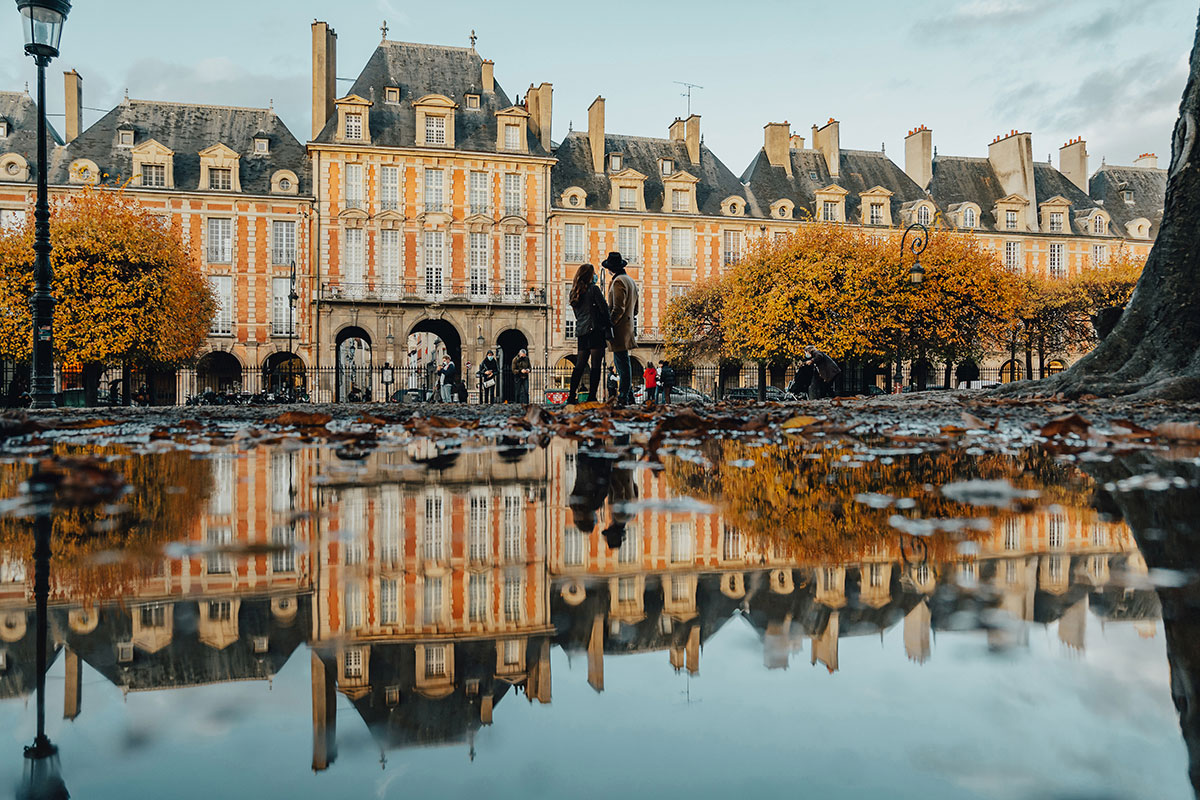
Capturing Autumn Reflections in Water
Water gives you another creative way to make the most of autumn colors. A lake or pond can mirror the surrounding trees, transforming a familiar landscape into an entirely different image.
Sunny days with little or no wind are ideal. The calmer the water, the clearer the reflection will be.
A tripod helps keep your camera steady. Using a longer exposure can also smooth the surface of the water and create an even more tranquil effect.
A polarizing filter (PL filter) can be useful as well. It reduces reflections on the water’s surface and can help produce a clearer, more defined image.
For the composition, try giving the autumn landscape and its reflection roughly equal space within the frame. This creates a calm and balanced, almost symmetrical composition.
Capturing the Mood of Autumn at Night
Autumn doesn’t disappear when the sun goes down. Illuminated trees, paths, and other elements can take on an entirely different character after dark.
For low-light photography, you can start with an aperture between f/4 and f/6, a shutter speed of around 1/10 to 1/50 second, and an ISO setting between ISO 800 and 1600.
A tripod is especially useful here. Longer exposures allow you to preserve details even in darker areas of the scene.
At the same time, keep an eye on the brightest parts of the image. If artificial lights become overexposed, adjust the exposure compensation accordingly.

Using Autumn Colors as a Portrait Background
Autumn colors can also make wonderful portrait backgrounds. Placing a person in front of warm yellow, orange, and red foliage immediately gives the photograph a strong seasonal character.
Use a standard or telephoto lens with an open aperture between f/2.8 and f/4. This creates a soft background and helps separate the person clearly from their surroundings.
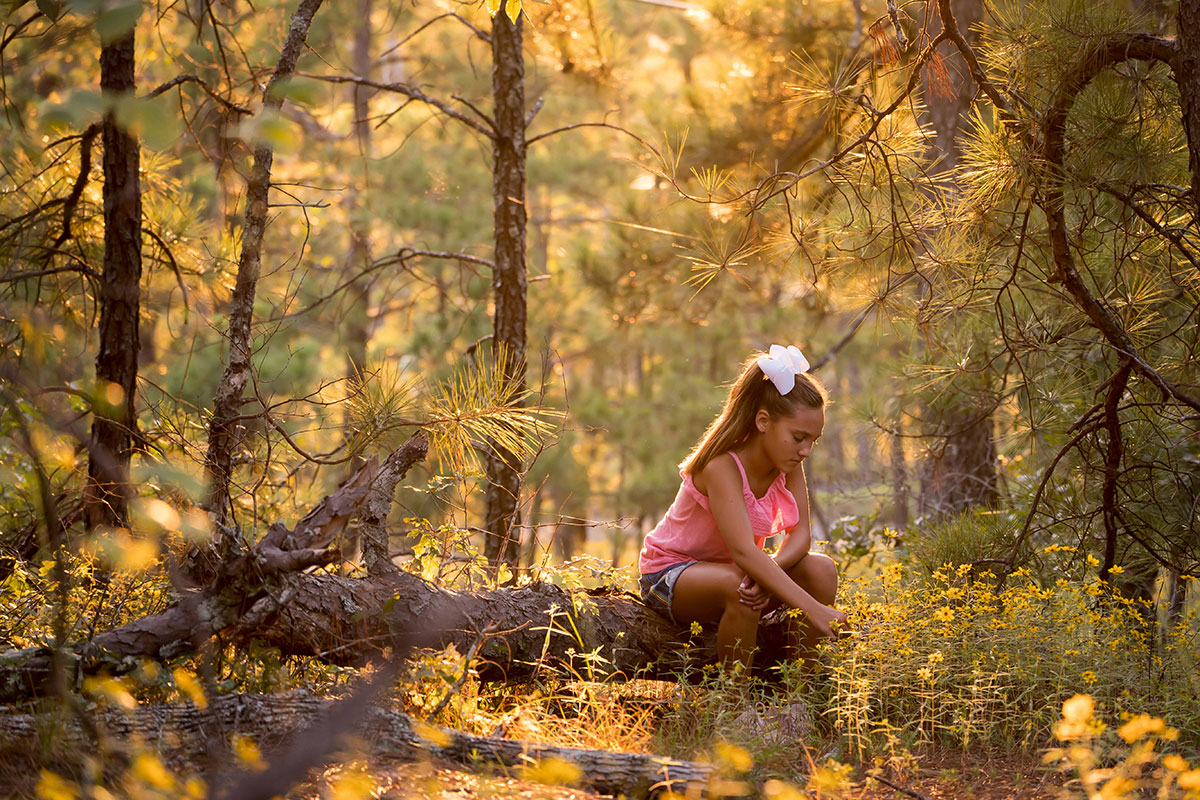
Backlighting can be particularly beautiful. With the sun behind your subject, the edges of their hair and body can glow with a warm rim of light.
If the face becomes too dark, increase the exposure compensation to around +1 EV.
Choosing the Right Time for Your Autumn Photos
Autumn is constantly changing, which makes timing an important part of autumn photography.
When nature reaches its most colorful stage depends on the region and elevation, and it can vary from one year to the next.
If you’re planning a specific photography trip, it’s therefore worth checking how the autumn colors are developing beforehand. In mountainous areas especially, the ideal timing can vary significantly with elevation.
And don’t focus exclusively on peak foliage. Interesting photographs can be found both before and after the peak. Fresh leaves, individual colorful trees, and fallen leaves on the ground can each tell a very different story.
Which Lens Should You Use for Which Subject?
You can photograph autumn landscapes with almost any lens. What matters most is what you want to show.
A wide-angle lens up to around 35 mm is ideal for expansive landscapes and impressive trees.
A standard lens between approximately 35 and 80 mm is particularly versatile. It works well for landscapes, spontaneous shots, and portraits.
With a telephoto lens from around 80 mm, you can bring distant parts of a landscape closer and isolate individual details.
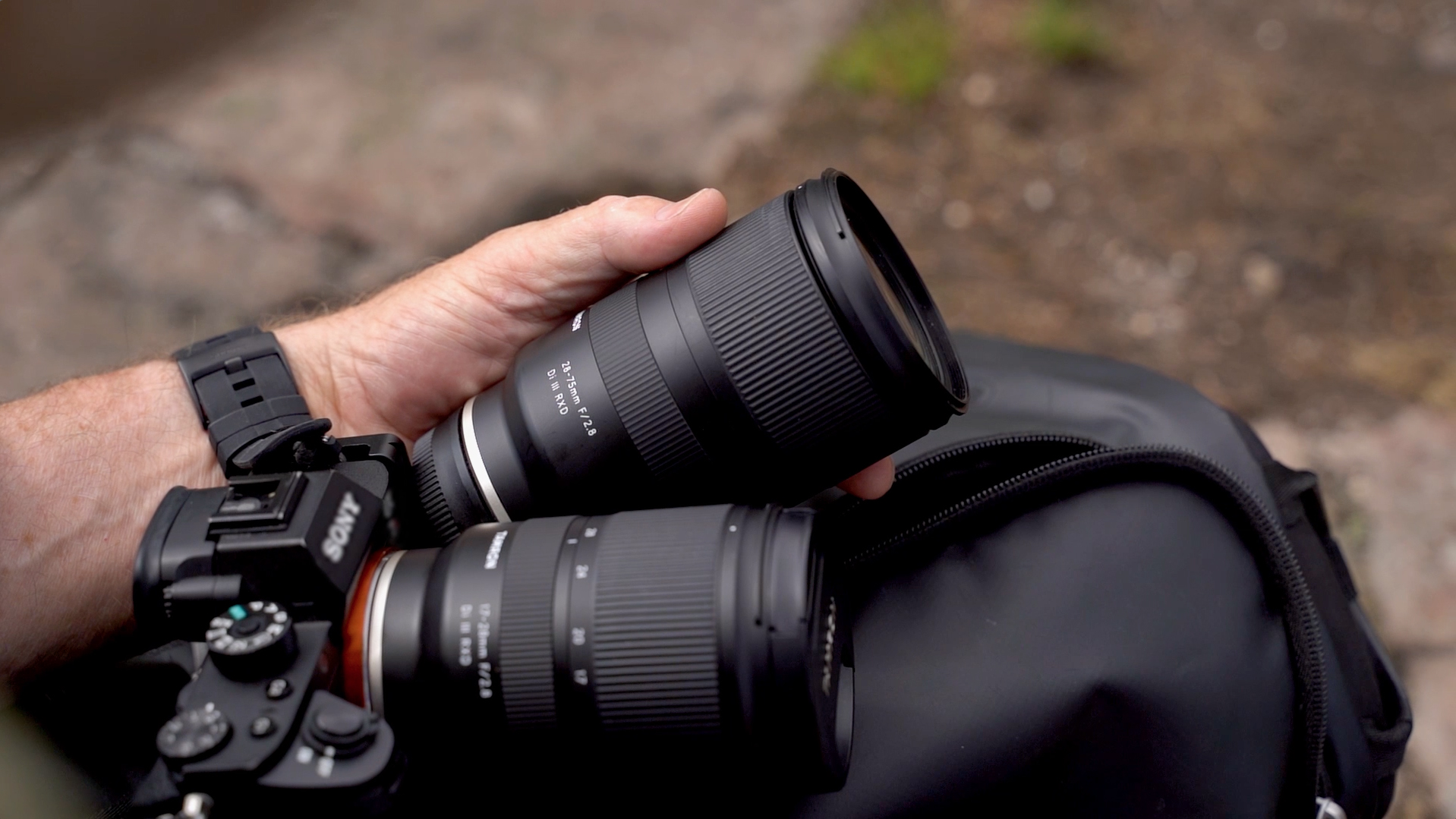
If you want to stay flexible while exploring, a zoom lens covering the wide-angle to standard range is a practical choice. It allows you to experiment with different compositions without constantly changing lenses.
What to Look for in a Lens
Focal length isn’t the only factor to consider when choosing a lens. Several other characteristics can make a real difference.
Maximum Aperture
A lens with a maximum aperture of f/2.8 or wider allows you to capture relatively bright images even when light levels are low.
It also gives you greater control over background blur, which can be particularly useful for detail shots and portraits.
Weight and Size
If you’re planning long walks or hikes in autumn, don’t underestimate the weight of your camera gear.
A lightweight, compact lens is much more comfortable to carry. And equipment that is easy to take with you is far more likely to be in your bag when a great subject suddenly appears.
Minimum Focusing Distance
If you enjoy photographing leaves and other small details, take a look at the minimum focusing distance of your lens.
The closer you can get to your subject, the more opportunities you have to create detailed images – even without a dedicated macro lens.
Autofocus
Autumn leaves move in the wind, while lighting conditions can change quickly. Reliable autofocus helps you lock onto your subject quickly and accurately.
When choosing a lens, consider the speed and noise level of the autofocus system, as well as whether you can switch to manual focus when necessary.
Image Stabilization
Image stabilization can be extremely useful when shooting handheld. This is especially true with telephoto lenses, where even small movements can become more noticeable.
The Most Important Camera Settings
There is no single camera setting that works perfectly for every autumn photograph. The ideal settings depend on what you want to capture and how the light behaves.
Aperture Priority: An Easy Way to Get Started
If you want to keep things simple, aperture priority is a great place to start.
You choose the aperture while the camera automatically selects an appropriate shutter speed. This gives you direct control over how much of the scene appears sharp and how blurred the background becomes.
Choosing the Right Aperture
For landscapes, start with f/8 to f/11. This gives you a generous depth of field.
For individual leaves and other details, an open aperture between f/2.8 and f/4 is often more effective. The softer background helps your subject stand out.
Shutter Speed
As a general starting point, try 1/50 to 1/200 second.
If trees and leaves are moving in the wind, use a faster shutter speed to prevent movement from appearing as blur.
In low-light conditions, a tripod allows you to work with longer exposure times.
ISO Sensitivity
In bright daylight, ISO 100 to ISO 400 is often sufficient.
As the light fades, and if you still want to use a fast shutter speed, you can increase the ISO to around ISO 800 to ISO 3200, for example.
Keep in mind that higher ISO settings can introduce more image noise. Increase the ISO only as much as the situation requires.
Correcting Exposure
Your camera’s automatic exposure can sometimes struggle with very bright or very dark subjects.
If bright areas are becoming overexposed on a sunny day, try an exposure compensation of around −1 EV.
If the image is too dark in cloudy weather or in a darker environment, a correction of around +1 EV can help.
White Balance Can Shape the Mood
Automatic white balance works well in many situations. But if you want more control over the overall color mood, try experimenting with different white balance settings.
Depending on the light, you can choose settings such as “Sunny,” “Cloudy,” or “Shade.” A cloudy setting can be particularly effective for emphasizing the warm tones of autumn.
If you shoot in RAW format, you have even more flexibility during post-processing. You can adjust the white balance later without having to make a final decision when taking the photograph.
Composition Makes All the Difference
Often, it isn’t the subject itself that makes an image compelling, but the way you choose to photograph it.
Look deliberately for different backgrounds. A blue sky can make autumn colors appear more vivid, while mountains or buildings can provide an interesting sense of scale.
Water can also become a powerful compositional element, adding another layer to the image through reflections.
When you find an interesting subject, photograph it from several different perspectives. Even a small change in your position can dramatically alter the composition.
Three Simple Compositions for Autumn Photography
You don’t need to master complicated rules to create a strong composition. Three basic approaches can help you get started.
The Rule of Thirds
Imagine dividing your image into three horizontal and three vertical sections. Place important elements near the points where these lines intersect.
In a landscape, for example, you could position the horizon along one of these lines.
The result generally feels balanced and calm.
Diagonal Composition
With a diagonal composition, you use a line or subject that runs diagonally through the frame.
It could be a path, a stream, or a row of trees. Diagonal lines add a sense of movement and can also create depth.
When you spot a natural line in the landscape, try deliberately incorporating it into your composition and see how it changes the image.
Centering Your Subject
Sometimes a deliberately centered composition can be highly effective.
A single tree that clearly stands out from its surroundings, for example, can be placed directly in the center of the frame. This approach also works well for detail shots.
To keep the image visually interesting, make sure the background complements the subject.
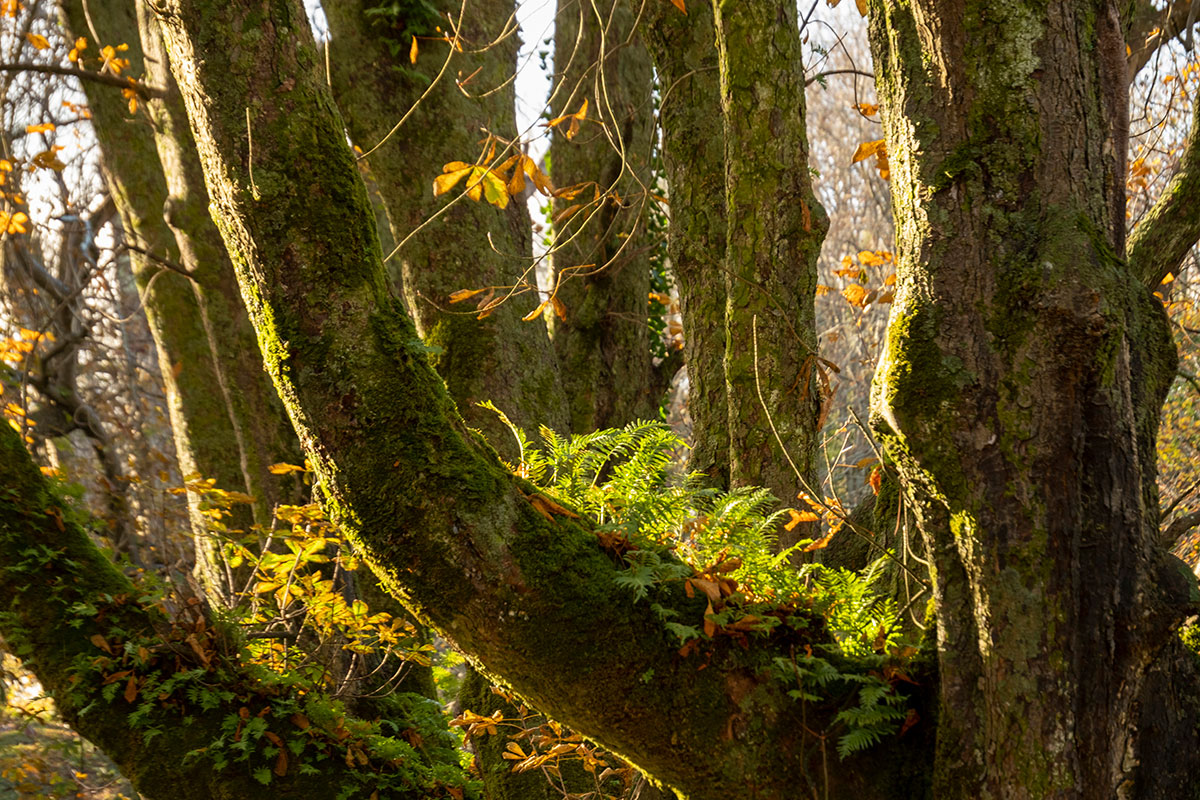
Learn to Read the Light
Light can completely transform a subject. That’s why it’s important to pay attention not only to the colors around you, but also to where the light is coming from.
Front Lighting
With front lighting, the sun is behind you and illuminates your subject from the front.
This is a good way to capture autumn colors vividly and naturally. The soft light in the morning or late afternoon can be particularly flattering.
Because relatively few shadows are created, however, the subject may appear less three-dimensional.
Backlighting
With backlighting, the light source is positioned behind your subject.
This can be particularly beautiful when photographing leaves, as the light shines through them and emphasizes their delicate contours.
The downside is that your subject can easily become too dark. If that happens, move the exposure compensation slightly into the positive range.
Sunrises and sunsets offer especially good opportunities for atmospheric backlit photographs.
Side Lighting
With side lighting, sunlight reaches your subject from the side. This creates stronger shadows and gives surfaces a more three-dimensional appearance.
The textures of leaves, branches, and other small details can really stand out.
Side lighting can be especially interesting in the morning and evening, when the sun is lower in the sky.
The Time of Day Changes the Atmosphere
It’s not just the direction of the light that affects your images – the time of day matters, too. In the early morning, the air is often clear and the light is soft, creating a fresh and peaceful atmosphere.
Shortly before sunset comes the Golden Hour. The warm light can make autumn colors look particularly rich and intense. At midday, the light is generally harder and more contrasty. That can still work beautifully if you’re looking for bold colors and strong contrast.
Whenever possible, visit the same subject at different times of day. You’ll quickly discover just how differently the same landscape can look.
Move Closer – or Step Back
One of the simplest ways to make your photographs more interesting is to change your perspective. Try shooting from ground level. A low viewpoint can emphasize the height of trees while also creating a greater sense of depth.
From a higher viewpoint, you can gain a broader overview of the landscape. A hill or bridge, for example, might give you a great view over colorful treetops. A low viewpoint can also work wonderfully with fallen leaves. Shooting close to the ground can make the leaves feel more dynamic and three-dimensional.
The most important thing is simple: move. When you find an interesting subject, don’t photograph it from just one spot.
Filters as an Additional Tool
Filters can expand your creative options when photographing autumn.
A polarizing filter is particularly useful for water photography. It can reduce reflections and help make both reflections and colors appear clearer.
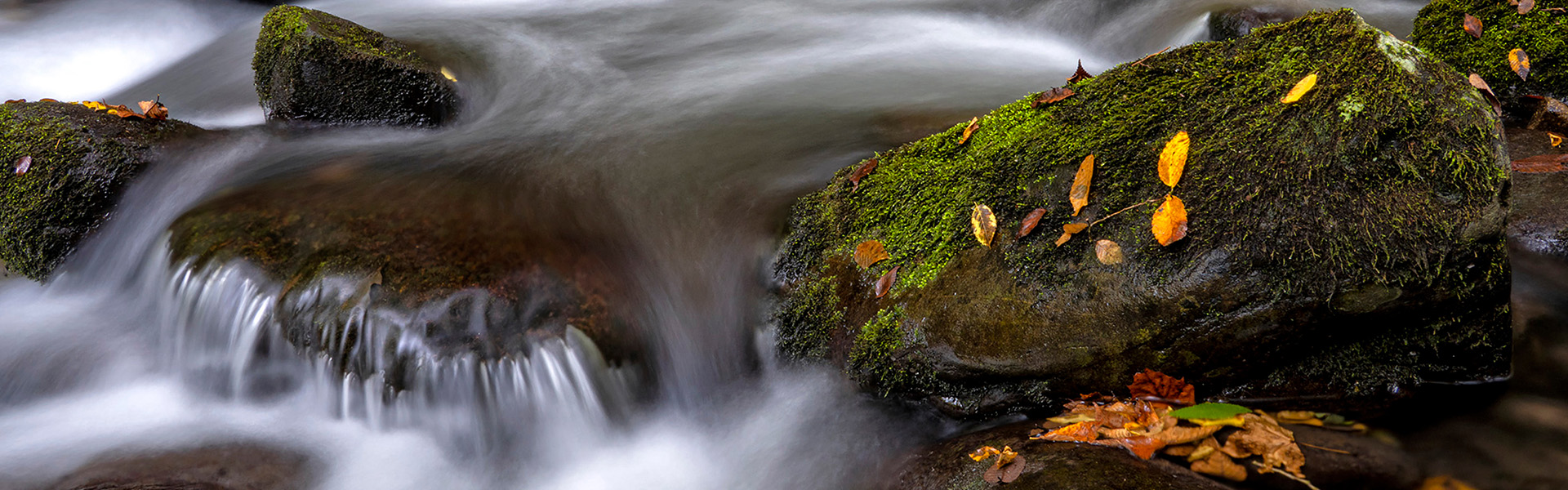
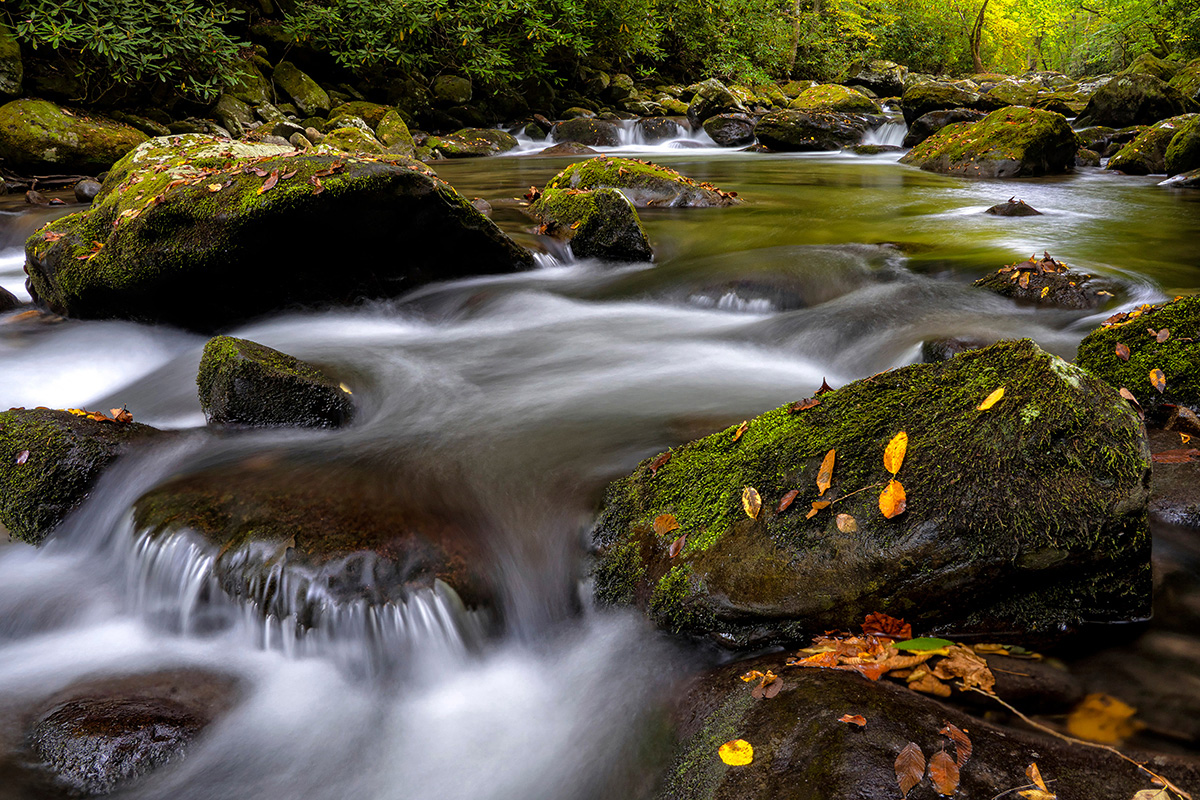
An ND filter is useful when you want to use long exposures in bright conditions. For example, you can photograph a river or waterfall with a longer exposure and create a smooth, silky effect in the moving water.
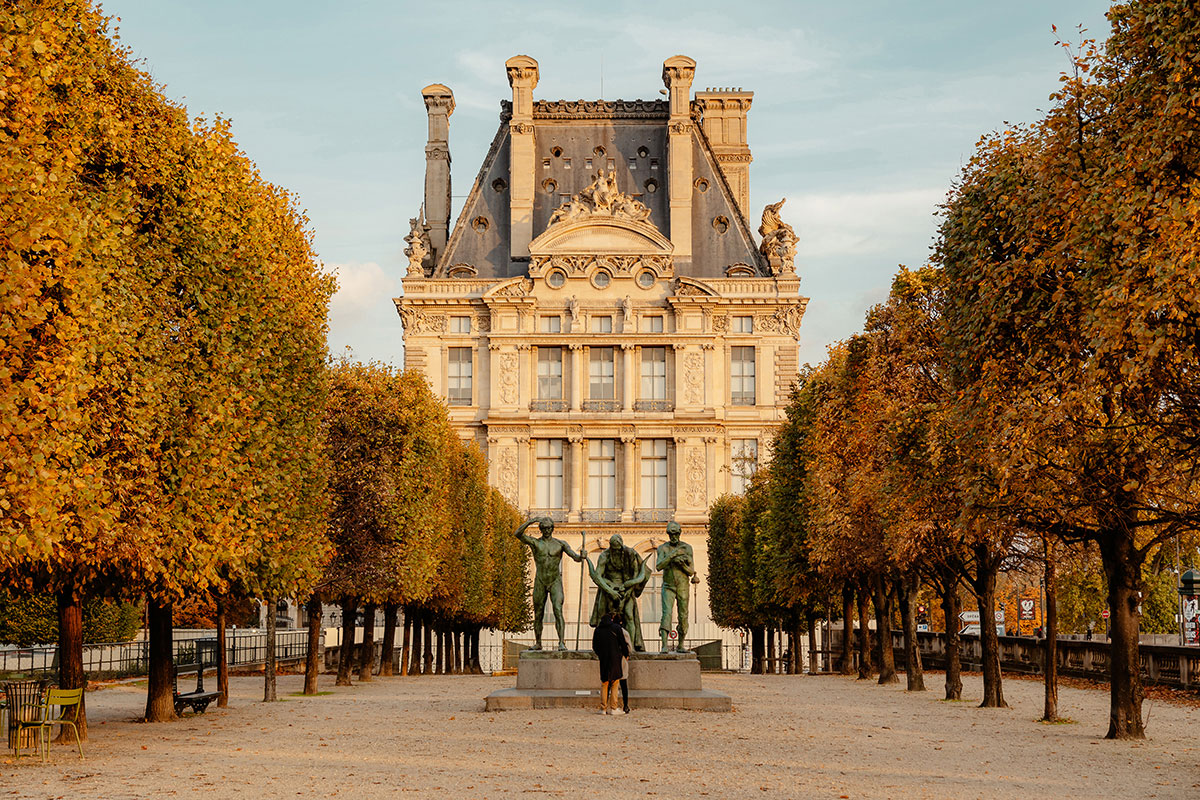
Autumn Is About More Than Colorful Leaves
When you head out with your camera in autumn, don’t limit yourself to searching for the most spectacular subject.
It might be sunlight filtering through the trees in the morning. It might be a quiet foggy landscape, a reflection on the water, or a single leaf lying on a wet path.
Take your time, look around, and experiment with different perspectives. Change your focal length, play with your aperture, and observe how the light changes throughout the day.
That’s the real appeal of autumn photography: you’re not simply capturing colors. With your camera, you can capture the mood of a place and reveal the unique character of this special season.
So grab your camera and head outside. Autumn is constantly changing – and that’s exactly why there’s always a new photograph waiting around the corner.
